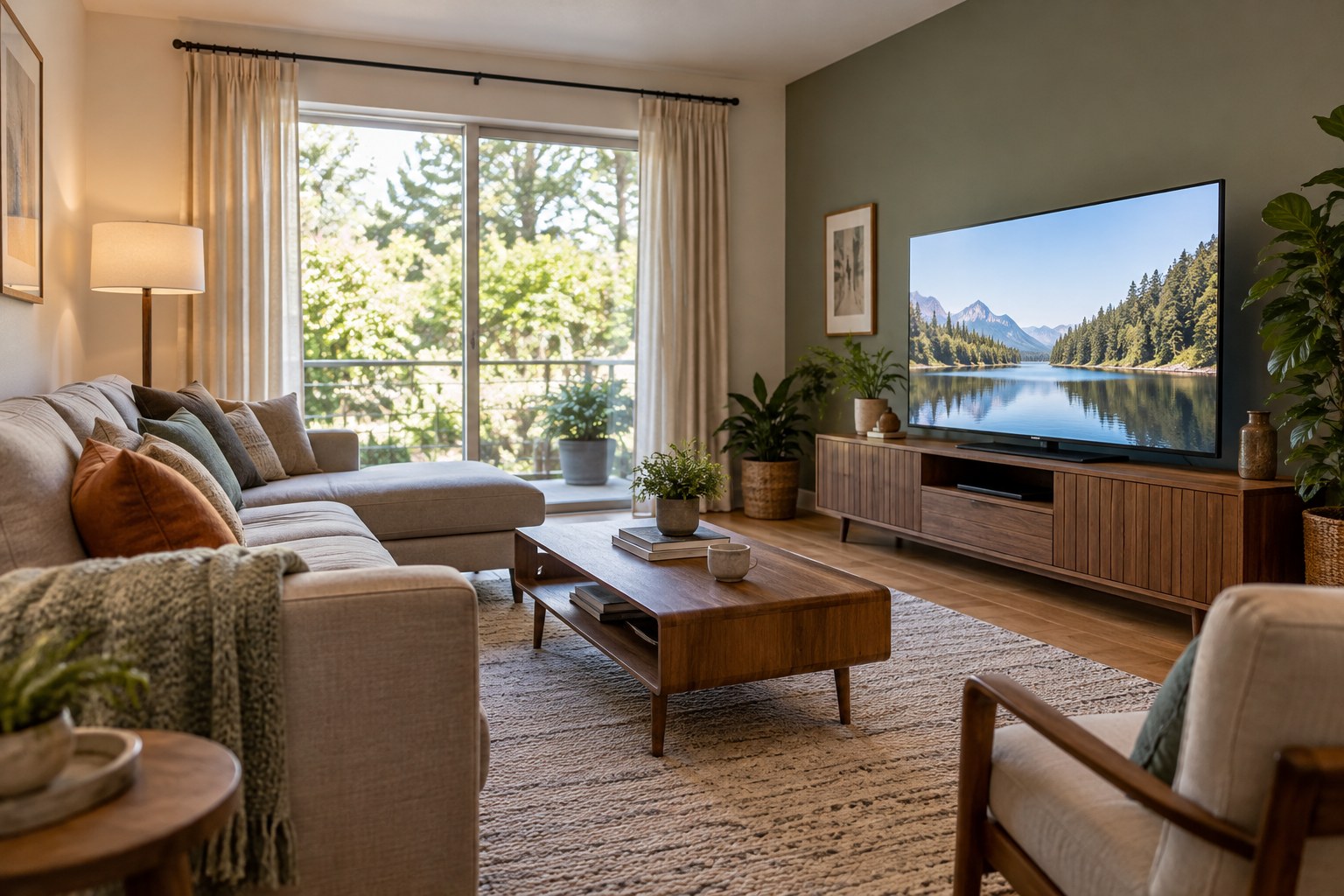
The largest screen diagonal is not automatically the most comfortable choice for your living room. Seating distance, furniture and ordinary content affect the result. Assess several sizes in the intended room before letting a promotion determine the purchase.
Make the dimensions visible
Mark the television's width and height with paper or removable tape. Use complete external measurements rather than guessing from the diagonal. Sit in the usual positions afterwards. This reveals whether the screen dominates the room or is awkward to view from a side seat.
Include the feet. Some models place them far apart, while others use a central stand. Check the required furniture depth and permitted placement. A screen may be narrow enough overall yet still be unsuitable for safe support on a particular cabinet. The full standing arrangement matters.
Include content and sources
Consider whether you mainly watch news, films, sport or play games. During a demonstration, seek representative material where possible. A polished sample film does not necessarily show how your ordinary sources will look. Source resolution and settings belong in the assessment alongside screen size.
Check existing connections and required equipment. A receiver, console or sound system can need additional cables and space. For wall mounting, weight, mounting pattern, wall construction and bracket must be appropriate. Resolve this beforehand and include necessary installation costs. A larger panel can change that arrangement as well as the picture area.
Consider light and daily access
Notice windows and lamps opposite the screen. The position should work at the times you normally watch. Do not rely exclusively on an impression formed in a brightly lit shop. Cable access and cleaning behind the television should also remain possible.
Choose a size that is usable from real seats and can be installed suitably. A smaller version with a sensible arrangement may be preferable to a larger offer that then demands new furniture. One universal viewing distance cannot replace this room assessment because preferences and content differ. The useful comparison combines the screen with the place in which it will actually be watched.