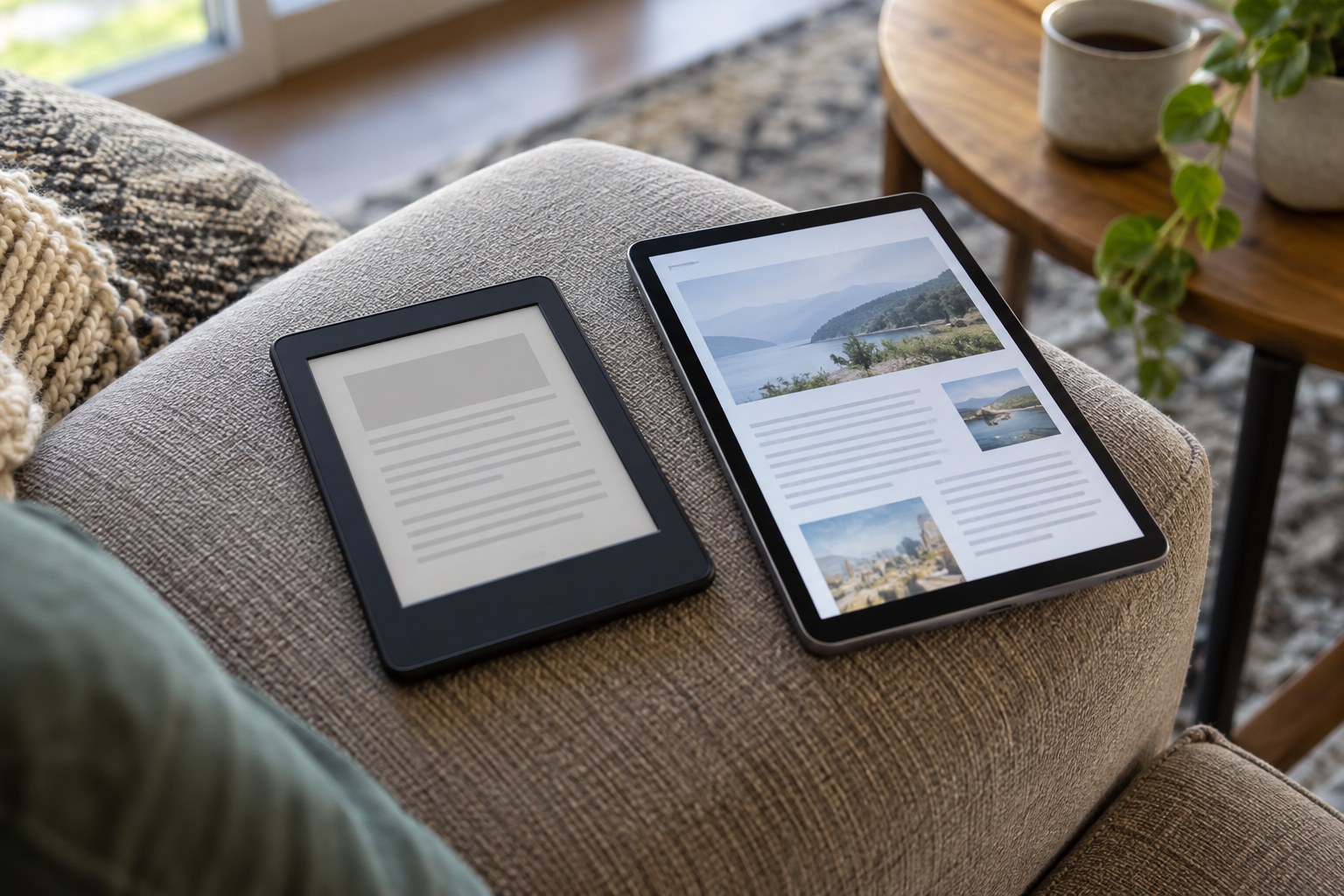
The appropriate reading device depends on what you read and where the content comes from. A device used mainly for novels serves different needs from one handling illustrated magazines and frequent notes. Start with your library and the services you use.
Check content before hardware
Record formats, library services and purchased material you want to retain. Verify their current compatibility with the exact device. Supporting a file format does not guarantee access to every protected or service-bound book. Establish the actual access route before buying.
Consider whether you mainly read flowing text or fixed-layout pages. A small screen may require more zooming and moving around on pages containing tables or illustrations. Where possible, try a representative document type. A perfectly adapted shop demonstration may not resemble your own files.
Compare ordinary reading conditions
Assess weight and grip for longer sessions. A case changes both and belongs in the comparison if it will remain fitted. Check whether page buttons or touch controls suit your usual holding position. One technical characteristic does not replace this handling assessment.
Think about where you read: sofa, commute or desk. Lighting can differ substantially. If possible, inspect the device in a comparable setting. Do not infer a universal health benefit from its display type; the decision here concerns personal use and comfort. Your preferred text size and navigation habits also influence which screen arrangement works.
Decide between an existing device and a dedicated one
An existing tablet can avoid another purchase when it presents your content comfortably. A dedicated reader may make sense when its particular focus is something you deliberately want. Consider which other functions will still require a second device.
Include a case, any stylus and necessary content subscriptions separately in the cost comparison. An inexpensive device cannot make an unsuitable book service appropriate. Choose the arrangement that makes your actual reading accessible and convenient. If both device types meet the same need, existing equipment and lower additional effort can decide the question. The useful outcome is a workable route to your reading, not a device category chosen in isolation.