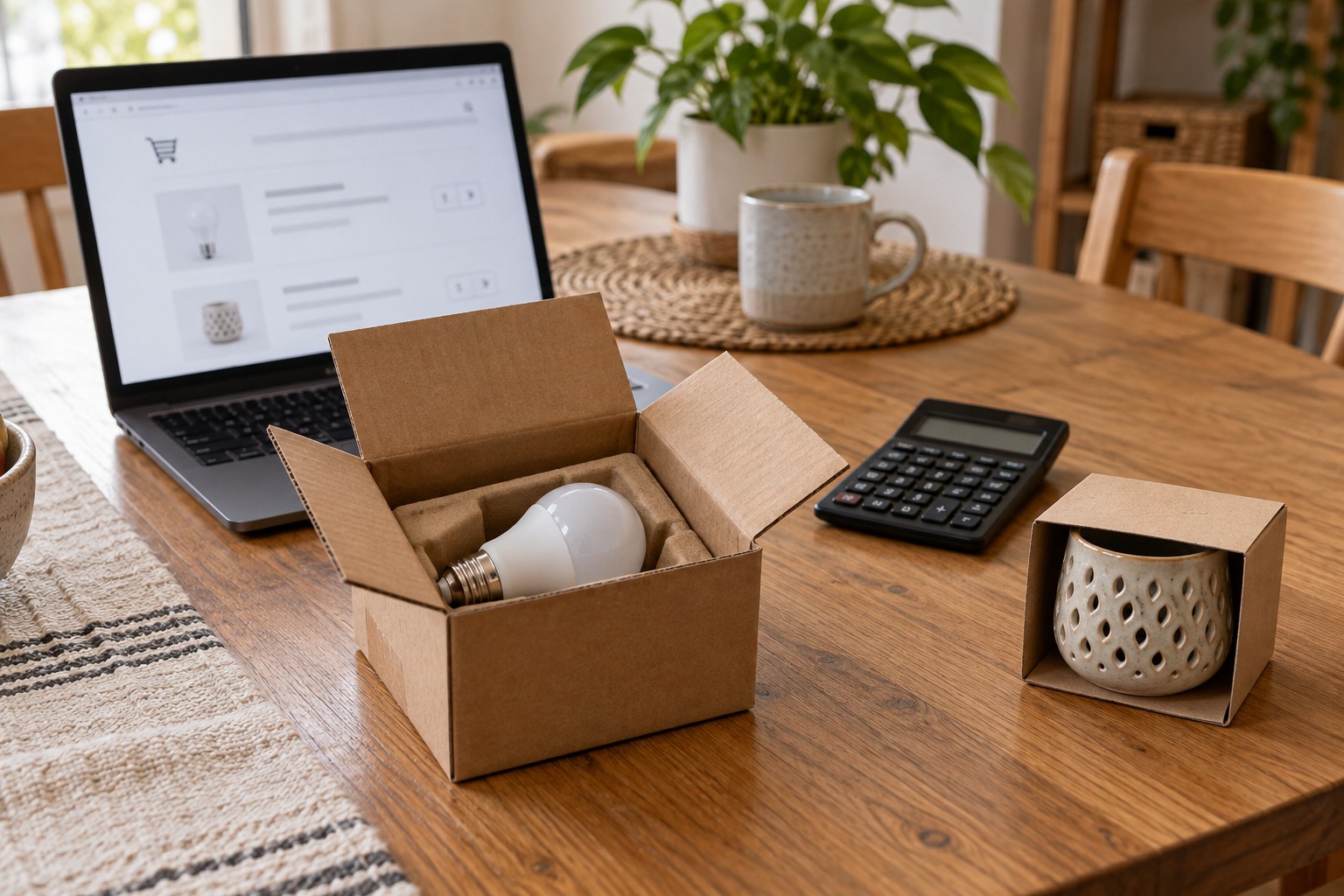
Near checkout, a message announces that only a little more spending will unlock free delivery. It can feel like a task that should be completed. In reality, two complete purchases are available: the needed basket with a delivery fee, or a larger basket without that fee.
Compare the final totals first. If the extra item costs more than the shipping saved, today's spending increases. That can still make sense when the item will soon be needed anyway. It is not an automatic saving simply because the delivery line now reads zero.
Assess the addition on its own
Would you buy the item without the shipping message? Is there already stock at home? Does the offered size or variant fit? These questions prevent an arbitrary low-priced object from becoming a parcel filler.
If bringing forward a planned purchase, assess its price separately. An overpriced addition can cancel the benefit of free delivery. Compare genuinely available alternatives rather than a remembered low price from an expired promotion.
Check the whole order
Some baskets contain several sellers or deliveries. Read the conditions for the actual order before adding another product. A displayed goods total may not count in the same way for every shipping rule. The confirmed checkout total is the relevant figure.
Consider whether the entire purchase can wait. If more genuine need will arise in a few days, a combined order may work better than an invented extra purchase today. However, an urgently needed item should not be unavailable for an unsuitable period merely to obtain a small shipping benefit.
An invented example makes the arithmetic clear: adding an $8 item to save $4 delivery increases the bill by $4. Whether that additional spending is worthwhile depends on the object's usefulness, not the word “free”.
Save the basket and decide later if necessary. Some distance from the delivery message can make it easier to treat the additional item as a separate purchase again. Keeping those decisions distinct makes the comparison much clearer.