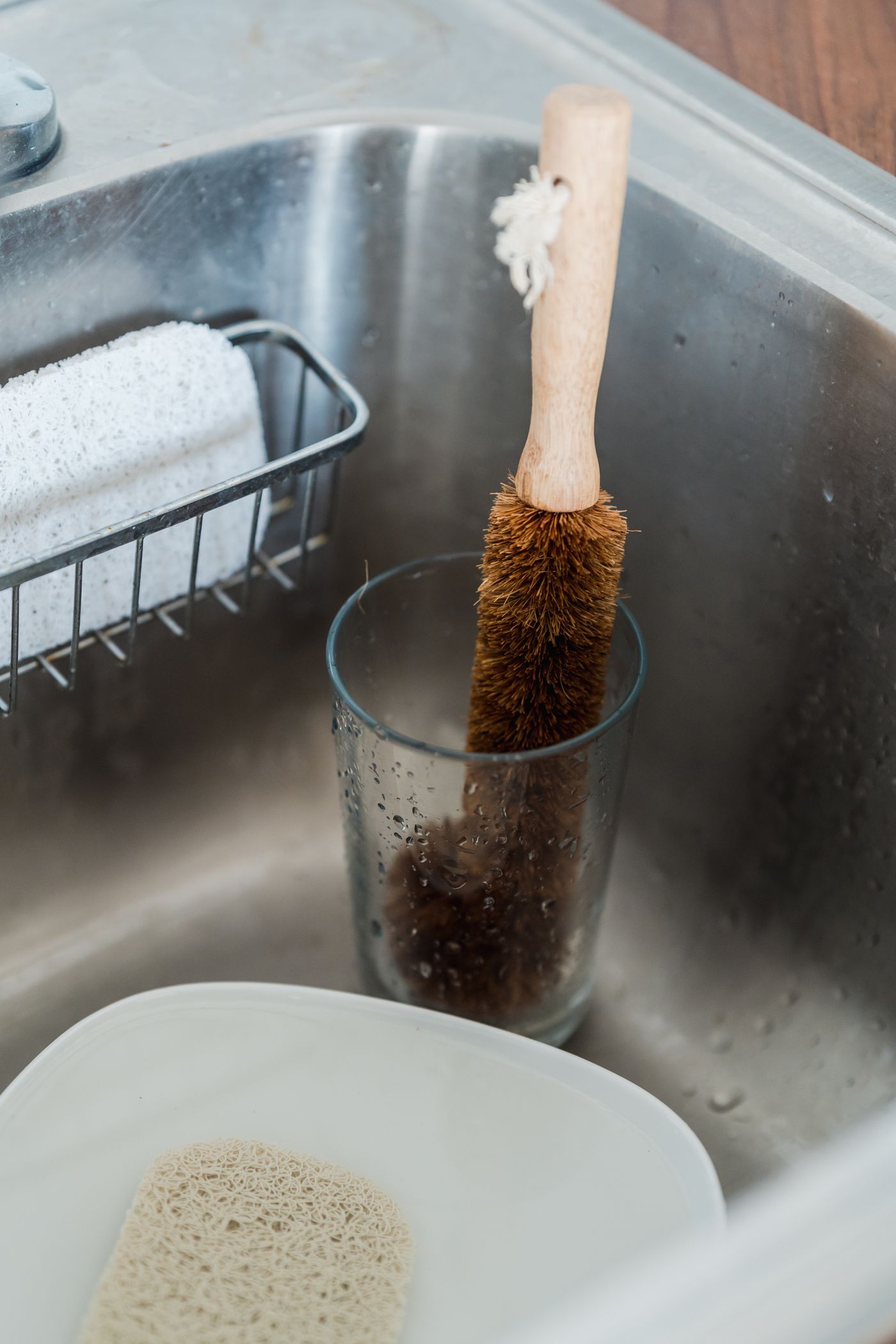
A large brush set promises an answer for many awkward spaces. Often only one or two pieces are used while the rest have no defined purpose. Start with the actual location: a narrow opening, an appropriate bottle interior or an accessible joint. The brush needs to work there without damaging the material.
First check the care guidance for the surface or object. Stiffer bristles are not universally better. A brush that works on a robust surface may be unsuitable for a coating. Choose material compatibility before shape or colour.
Useful reach rather than maximum size
Measure the narrowest opening and required depth. A long handle contributes little if the head will not enter or cannot be withdrawn safely. For curved areas, the product information should support the intended use; do not force an unsuitable shape into place.
Consider where your hand sits during the task. A short handle may work for a small open surface but provide insufficient reach elsewhere. Choose around the task rather than the longest item in the range.
Plan cleaning and separation
Where will the brush be cleaned and dried after use? Appropriate hanging or storage is part of the tool's routine. Follow the manufacturer's care and replacement information. A brush holding inaccessible residue is not automatically suitable for another task simply because it has been rinsed forcefully.
Keep tools for different areas clearly separated. A label or colour can help if everyone in the household understands the assignment. Separation does not replace cleaning, but it reduces confusion over which tool belongs where.
For replaceable heads, check the price and availability of the correct replacement. A low initial price says little if only another complete set can be bought later.
Start by buying the tool for the unresolved task. If another specific gap appears, add the appropriate piece. This produces a small collection whose tools remain accessible and identifiable rather than a drawer full of brushes that almost fit.