A belt first needs to pass through the loops of the clothes for which you are buying it. Measure their usable width and compare it with the belt. A prominent buckle may look appealing yet interfere when sitting beneath a top. If possible, try the combination with typical trousers rather than holding the belt loosely around your waist.
Pay particular attention to sizing. Depending on the supplier, a measurement may describe overall length or distance to a particular hole. Find the measuring instructions and compare them with a belt that already fits. A familiar trouser size does not automatically translate into the correct belt length.
Shortening is not always intended
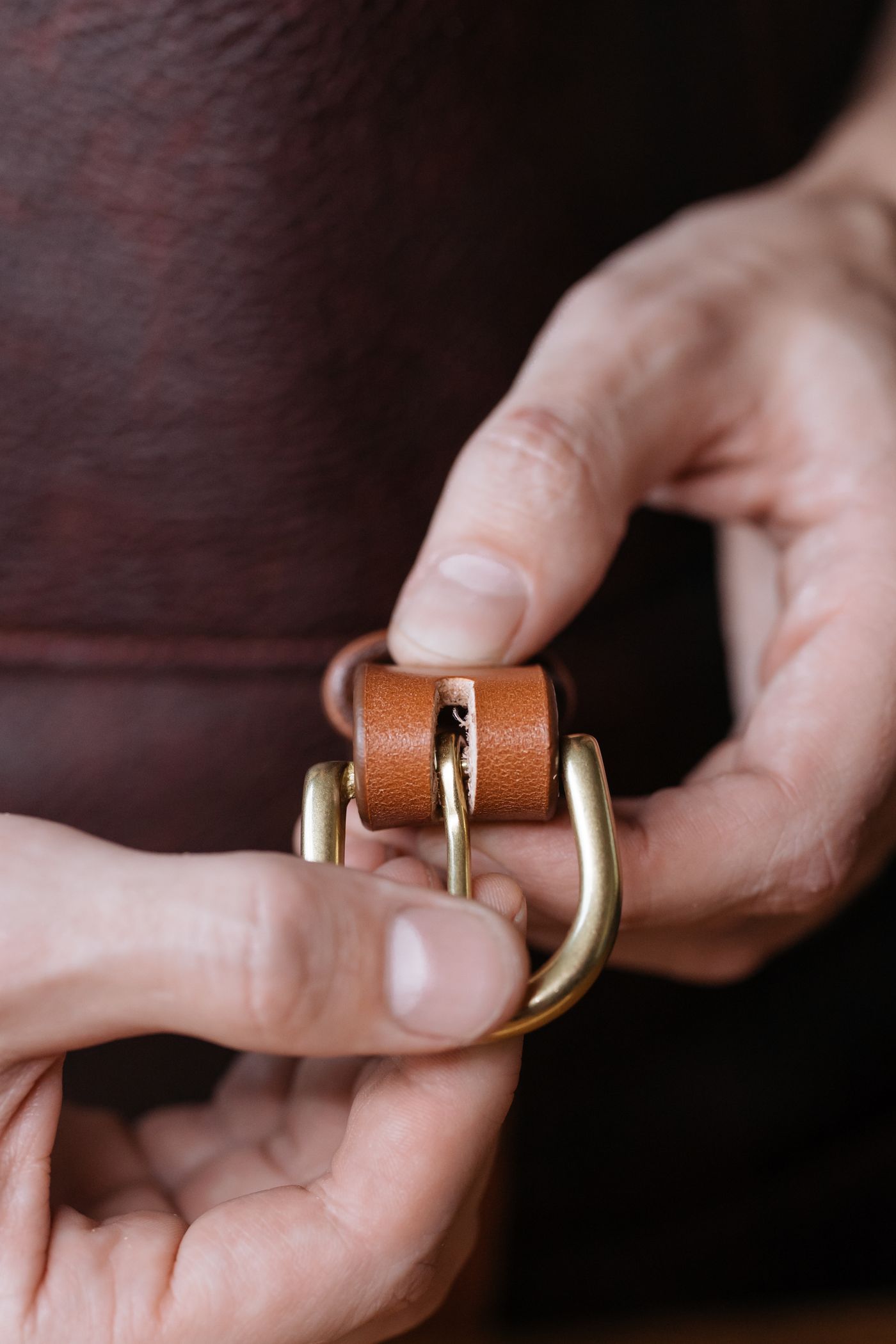
If you want to shorten the belt, check the construction and instructions explicitly. Some buckles are designed to detach for this purpose; others are not. Do not cut a new item speculatively. A manufacturer-approved adjustment differs from improvisation that may damage the fastening or material. Ask about an in-store adjustment service before buying if that would be useful.
Replaceable buckles can help when suitable replacements are genuinely available. Check width, attachment type and exact model compatibility. The word interchangeable does not by itself establish whether another buckle can be purchased later. For a simple everyday belt, a straightforward dependable connection may matter more than an extensive accessory system.
Inspect the areas that repeatedly bend and carry tension. Read material and care descriptions, particularly for coated or layered construction. Avoid assuming that a material name guarantees a particular service life. The actual product and how it is used remain important.
Finally compare how many pairs of trousers you own will work with the belt. An unusual width or very large buckle can limit use substantially. If one belt serves several ordinary combinations, you may need fewer alternatives. After finding a suitable option, retain the sizing method and model details. This makes a later replacement more precise than ordering another approximate centimetre measurement and hoping it corresponds to the same fit.