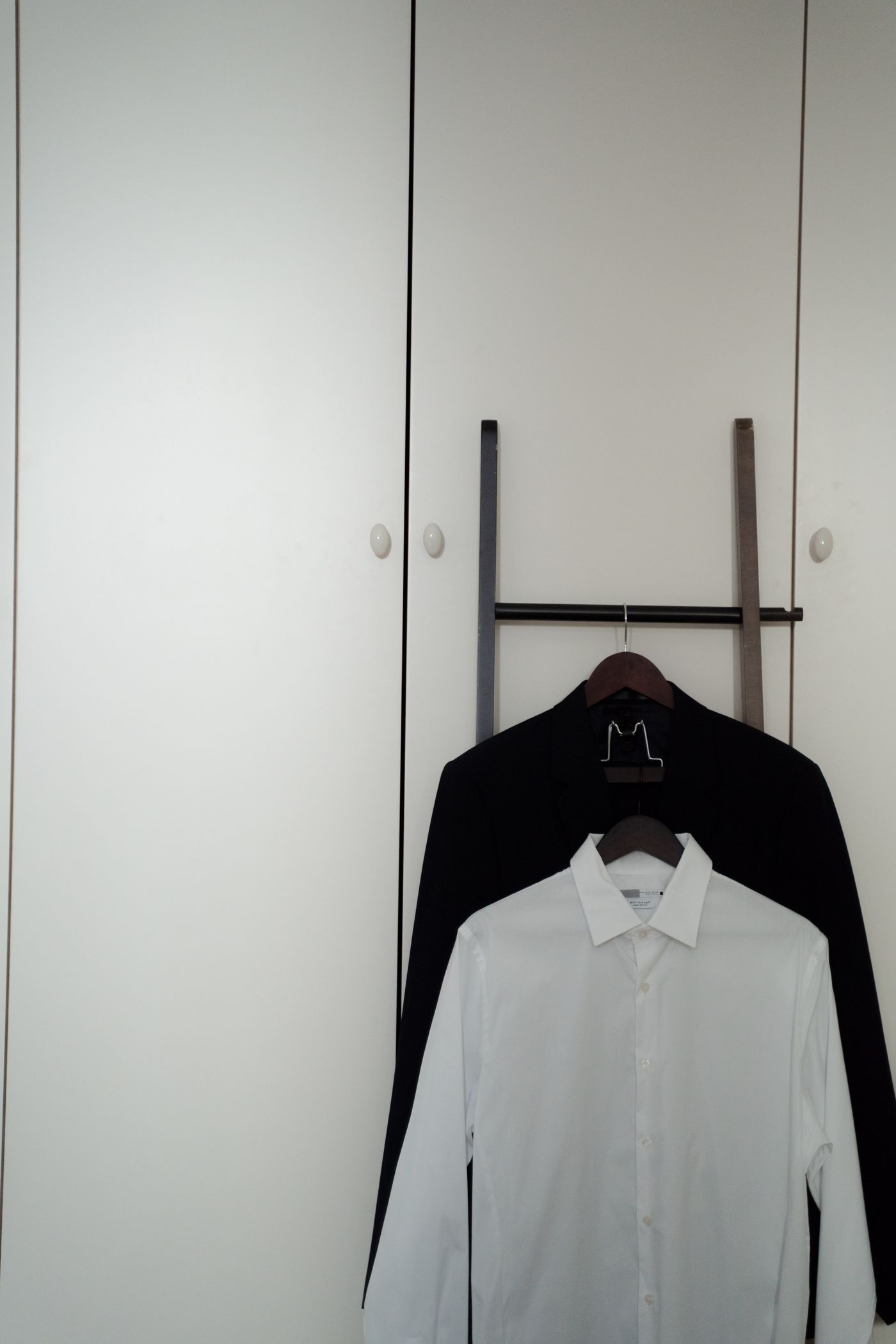
A work wardrobe does not have to contain a fixed number of neutral pieces. It has to cover the situations that occur in your working week. An office with occasional client meetings differs from changing workplaces or mostly online meetings. Write down the next two ordinary weeks and mark days with particular requirements.
Then gather clothes that already fit and that you enjoy wearing. Build complete combinations including footwear and an outer layer. Attractive individual garments are not yet working outfits. Note where a combination fails because something is missing and where you merely want another option. That distinction limits the shopping list.
Laundry timing determines the reserve
Consider how often washing or professional cleaning is realistic. A small selection only works when garments become available again in time. Include drying and ironing rather than treating every evening as spare maintenance time. Another frequently worn top may help more than a striking piece that works with only one pair of trousers.
Read care instructions before buying. If several candidates require effort you usually avoid, the selection does not suit your routine. Include known alteration costs too. Trousers awaiting shortening are not yet an immediately available replacement, even though they are already in the wardrobe.
Colours can help combinations without making everything look identical. Choose pairings you genuinely want to wear. A patterned top you own may work with several plain bottoms. A new base colour adds little if it conflicts with existing shoes and jackets. Photograph complete outfits for your own reference so that you can find them on rushed mornings.
Fill two specific gaps
Rather than replacing everything at once, buy for the most important gaps first. These might be trousers that suit several existing tops and shoes appropriate for longer journeys on foot. Use the additions in your normal routine before buying further variations. This reveals whether planned outfits work while moving, sitting and dealing with changing temperatures.
For an unusual event, borrowing or adding one piece to an existing outfit may make sense. Compare the complete effort, including cleaning, collection and return arrangements. Such a solution need not be permanent; it can prevent a short-notice occasion from controlling the whole shopping plan.
Keep a record of categories you deliberately do not need to buy. Perhaps there are already enough jackets but too few suitable tops for warm indoor spaces. This note helps during sales, when an appealing price concerns an already well-stocked part of the wardrobe. Additions are most useful where they remove a recurring shortage.
Include the transition between commuting and the workplace. One pair of shoes may suit the journey while another pair already owned is used at the destination. An outer layer can also be removed without requiring a completely different outfit underneath. Consider these arrangements before each temperature problem prompts another purchase. If changing at work is part of the plan, include suitable storage and transport for the additional items. Only a combination that is practical to maintain should count as an available solution.
After a few weeks, review which combinations were actually worn and which problems remain. That evidence is more useful than a generic list of supposed essentials. You do not have to invent a new outfit every morning. You need a dependable selection that fits your working days, available care time and personal preferences. Repeating a successful combination can be a deliberate choice rather than a failure to own enough clothes.