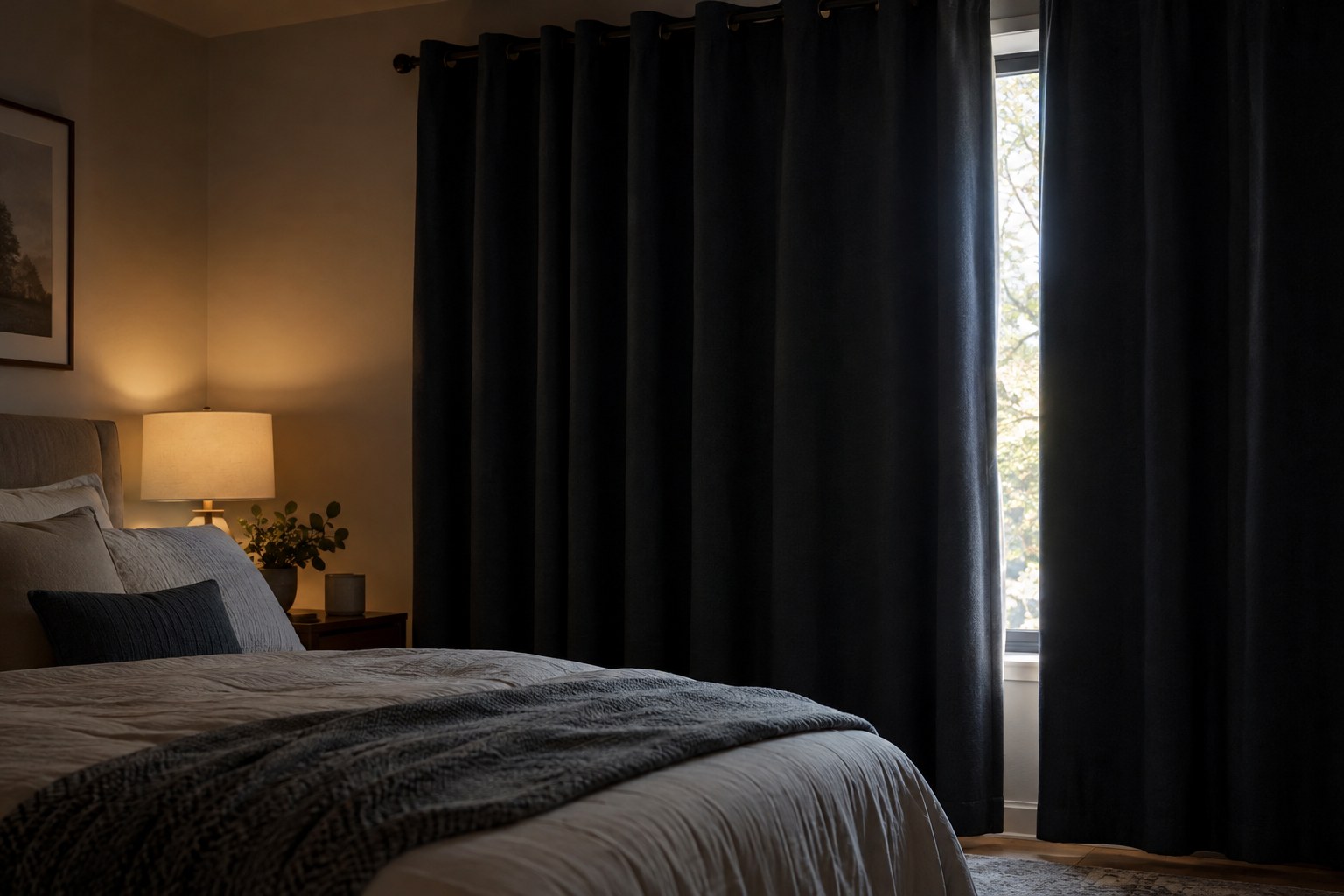
Fabric described as blackout is only one part of a window arrangement. Light may enter at the sides, above or below the curtain. Assess the actual installation rather than treating a fabric description as a promise about the entire room.
First identify where the unwanted light enters. Is it through the window area, a side gap or another source in the room? An additional curtain does not automatically solve a problem outside the space it covers.
Plan the edges
Compare the intended hanging system with the available wall area. Can the fabric extend in the planned way without interfering with a cupboard or door? Check the system information instead of improvising a way to press the fabric against the wall afterwards.
Window handles, deep sills and radiators can affect where the curtain hangs. The window still needs to function as intended. An arrangement that works only when the window remains inaccessible may fit everyday life poorly.
Separate fabric performance from installation
Read the description for the specific fabric option. Privacy and blackout wording do not automatically describe the same property. For precise requirements, ask for suitable product information or a sample rather than inferring performance from a dark photograph.
The mounting arrangement must suit the wall or ceiling and the weight of the complete setup. A heavy layer can have different requirements from a light sheer curtain. Establish appropriate fixings according to the manufacturer's instructions; choosing fabric does not replace installation planning.
Include operation and care
How will the curtain be opened each day? Is there enough room for the gathered panels? Check that it can move without catching on furniture or other objects. A pleasing closed appearance contributes little if daily opening becomes awkward.
Follow the care instructions for the fabric and any coating. The required size also needs to be manageable within the available cleaning routine. Finally, compare the whole arrangement: fabric, support, necessary accessories and alterations. An inexpensive individual panel can become a very different purchase when missing components are included.