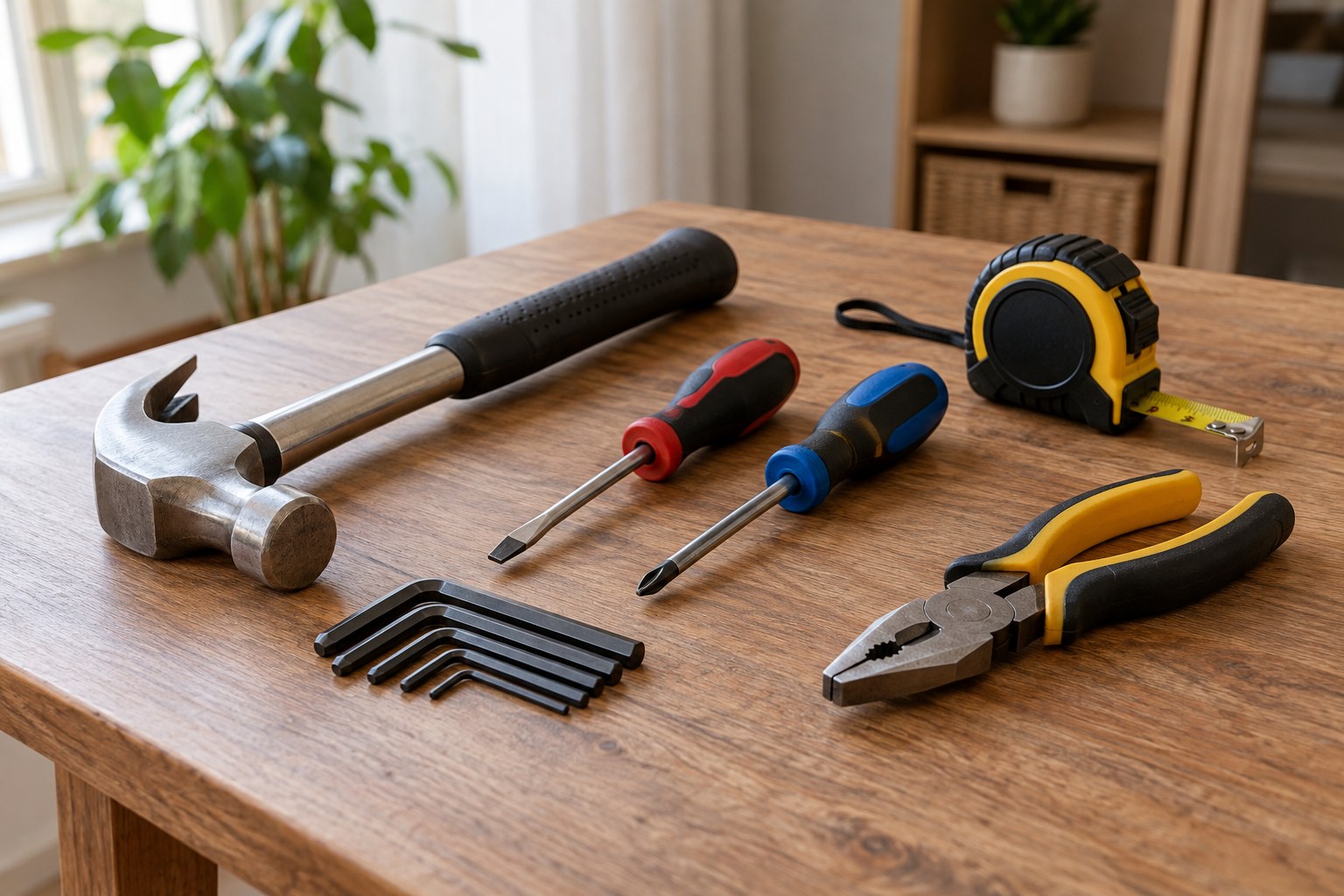
A tool case containing many pieces looks comprehensive. Occasional furniture assembly, however, often requires only a few suitable tools. Begin with specific tasks and their instructions. A kit should cover those requirements rather than appear extensive through numerous irrelevant attachments.
Check which tools are already available and in appropriate condition. Another tape measure or several nearly identical screwdrivers do not automatically add value. Missing sizes can be purchased individually once the task clearly identifies them.
Correct fit before broad selection
Screw heads require the intended drive type and size. An approximately fitting bit is not a sensible economy. Read the assembly instructions and compare tool markings. Where a supplied tool is intended for the job, it may already be sufficient for a one-off assembly.
Handle design should be assessed through practical use. A tool needs to be controlled securely and intended for the task. A particularly large or heavy version is not automatically better where access is restricted or the work is small.
Include measuring and supporting tools
A suitable tape measure and the aids listed in the instructions may be more useful than additional specialist bits. Check that scales are readable and cover the dimensions needed. The tool list should also allow for preparing the working area where the furniture instructions require it.
Distinguish ordinary user tasks from work requiring specialist knowledge or qualifications. Owning a household toolkit does not authorise electrical, gas or other specialist work. A difficult fixing requirement is not resolved solely by possessing a tool.
Assess the case as storage
Can frequently used pieces be removed and identified individually? A tightly moulded insert can look neat while leaving little space for a necessary replacement later. A small flexible container may better suit a collection that grows gradually.
Compare the cost of the tools actually required with the kit price. Count only suitable useful pieces. A high piece count may include many bits irrelevant to your tasks. A small complete selection is easier to inspect, store and replace selectively when necessary.