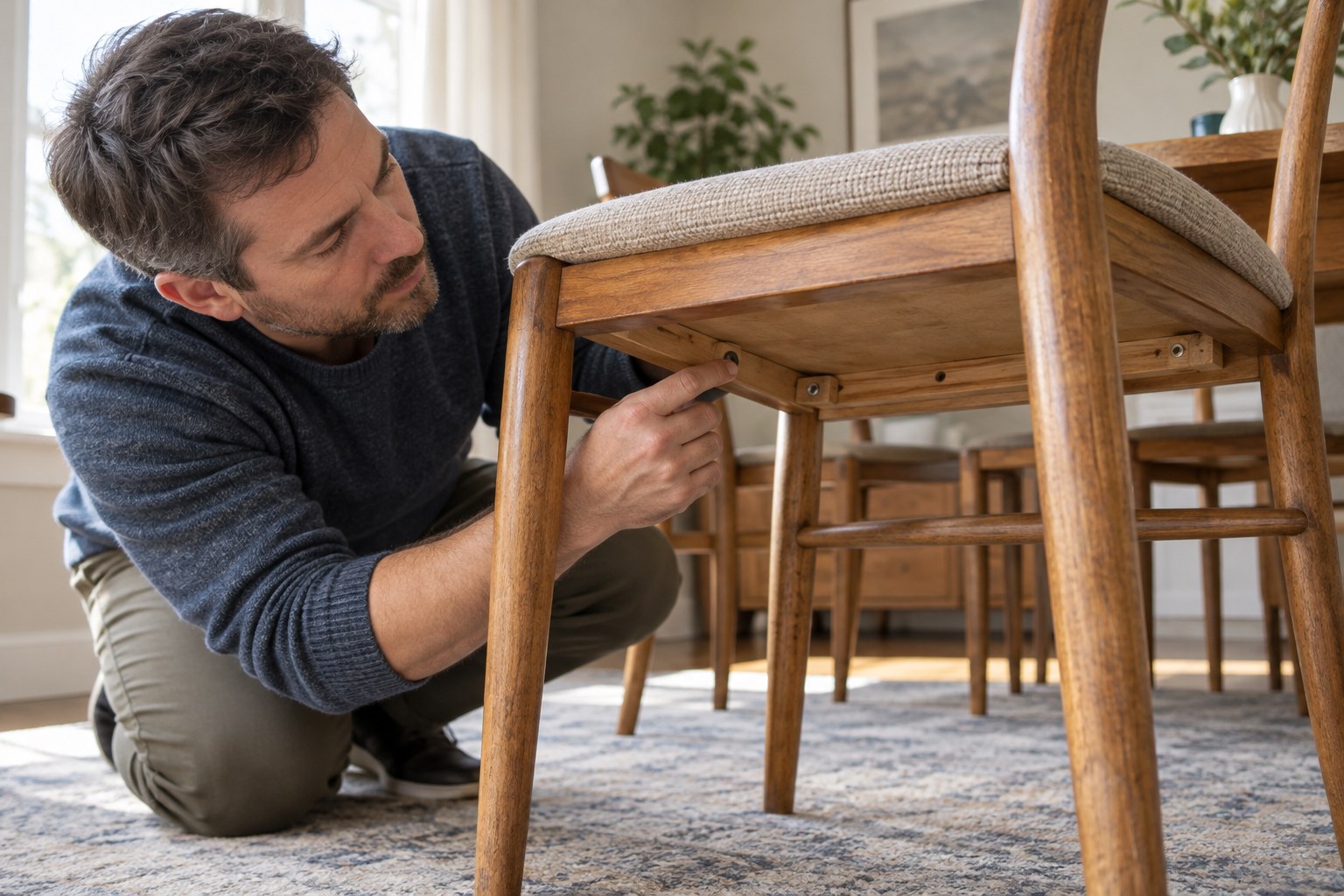
Used furniture cannot be assessed solely against its former retail price. What matters is its current condition, exact configuration and the effort required to move it into place. A short inspection list helps examine those points independently of an appealing advertisement.
Before viewing, define the function required. Dimensions and needs remain the same as for a new purchase. An inexpensive cabinet is unsuitable if its compartments do not hold the intended objects or its doors cannot open in the room.
Ask for the relevant details beforehand
Request complete outside dimensions and usable internal measurements where needed. Ask for the model identification, instructions and known damage. Photographs should show the actual item, including its back, underside or other relevant areas where accessible.
Establish whether shelves, feet, keys and fittings are included. A cabinet photographed closed may be incomplete inside. Record unresolved questions instead of assuming an unmentioned feature is present.
Check ordinary function without risky testing
At a viewing, doors and drawers can be moved carefully within their intended use. Look for misalignment, missing parts and visible damage. Do not perform unsafe load tests on connections. A brief inspection does not replace expert assessment when structural components are uncertain.
Examine surfaces in adequate light. Minor wear differs from swollen panels, broken components or unexplained structural alterations. Identify which defects are cosmetic and which might affect use or appropriate installation. Where that distinction is unclear, a low price should not hide the uncertainty.
For upholstered pieces, inspect covers, seams and general condition. Establish the specified care method and whether any necessary cleaning can actually be arranged. Adding a throw is not evidence that an underlying condition has been resolved.
Do not dismiss missing parts as trivial
Check replacement availability before buying. An apparently simple drawer runner or foot can be model-specific. Calculate using confirmed parts and prices rather than the hope of finding something similar.
Missing instructions or safety information can leave later assembly unclear. This is especially relevant to furniture requiring wall anchoring or a particular configuration. A previous owner's improvised arrangement is not automatic approval to repeat it.
Plan collection and assembly
Measure the route from the current position to transport and then into your own home. Establish which parts may be dismantled according to the instructions and who will do it. A large item should not be taken apart speculatively on collection day.
Include the vehicle, appropriate securing arrangements, helpers and any professional transport needed. Those expenses belong to the purchase even when the advertisement names only the furniture price. Check that collection timing is realistic and the destination can be prepared.
Keep a clear record of the exact item, agreed included components and known defects. Legal conditions depend on the individual transaction; an inspection list does not replace checking the actual agreement.
Used furniture can be appropriate when condition, dimensions and effort align. Make the price decision after those questions. This turns an attractive offer into a defined purchase rather than a project whose missing parts and transport difficulties appear only afterwards.