A dehumidifier's litre rating does not automatically describe the water it will collect each day in your home. A useful purchase comparison needs the conditions behind that figure and an idea of when the appliance will actually run. Persistent moisture also deserves investigation rather than being hidden behind an equipment purchase.
Separate the room problem from appliance use
Describe the reason for considering one: slow-drying laundry, occasional humidity in a particular room or a continuing problem. Recurring wetness, visible damage or an unclear cause may require professional assessment. Comparing dehumidifiers does not diagnose a leak or building defect. Making that distinction helps avoid paying ongoing electricity costs while leaving the underlying issue unresolved.
Record the intended room and its usual conditions. Manufacturer Meaco explains that a compressor machine's extraction performance depends on temperature and relative humidity. Compare ratings under similar conditions. A large figure obtained in a warm, very humid test setting is not a promise for a cool cellar.
Turn power into an estimate
An approximate electricity calculation requires electrical input and operating time. In an invented example, 250 watts is 0.25 kilowatts. Four hours would consume one kilowatt-hour if input remained constant throughout. Multiply that energy by your tariff. These figures explain the arithmetic and do not describe a particular product.
In use, controls and surrounding conditions can change the pattern. Put several operating-time scenarios side by side, such as short daily use and longer sessions on selected days. State the assumptions clearly. A precise annual total without plausible operating hours creates more confidence than the information supports.
If you can measure a suitable existing appliance, record a comparable period and its conditions. Avoid projecting a year from one unusually humid hour. Measurements are most useful when they represent an actual routine rather than an attempt to produce the smallest possible number. Keep observed consumption distinct from a forecast for a different room or season.
Include emptying and sound
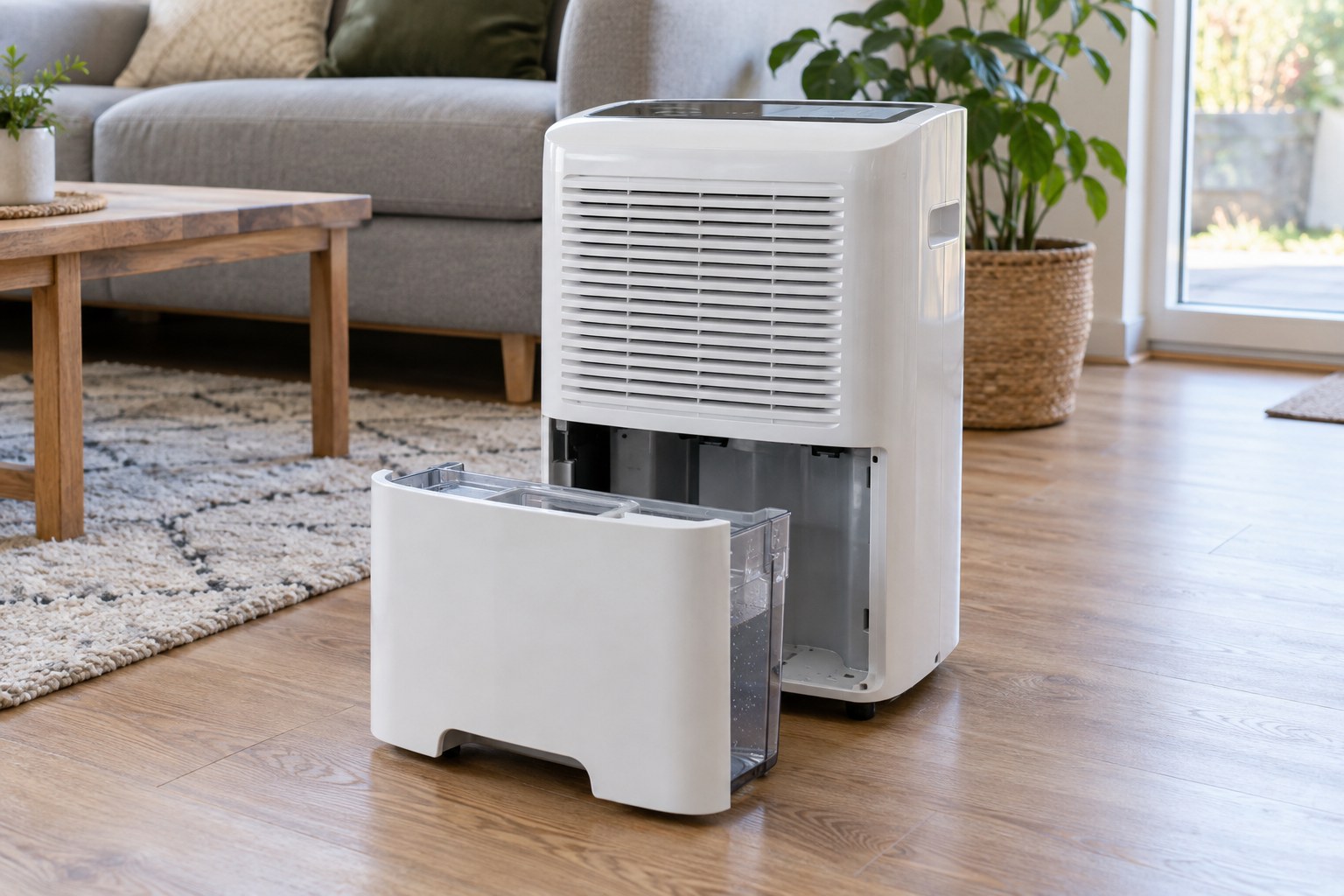
A small collection tank may mean frequent emptying. Check how it slides out, its filled weight and the route to a suitable emptying point. Continuous drainage requires an appropriate arrangement specified by the manufacturer. A hose included in the box does not establish that your home can accommodate that arrangement.
Consider the proposed operating hours in the room. An appliance can be technically suitable and still disturb calls or rest. Compare noise information only under understandable conditions, and inspect return terms if you cannot judge the sound beforehand. Do not invent a universal threshold below which everyone will find a machine unobtrusive.
Compare more than purchase price
Set the appliance price beside necessary accessories, electricity and maintenance. A cheaper model may involve more handling; a more expensive one may contain features you never use. Choose around appropriate operating conditions and an explainable schedule. The proposed solution should identify when and why the machine will run, rather than merely repeating its advertised extraction rating. That creates a comparison you can revisit after observing real use.
Record the intended schedule and review it after the first ordinary days of use. If the machine must run substantially more often than expected, examine why. Revising the estimate is more useful than preserving an initially attractive low-cost assumption that no longer describes the room.