A small household does not automatically need the smallest dishwasher. Two people who cook every day and pack lunches may produce more washing-up than several people who usually eat out. The useful question is what must fit between washes, and how soon those items need to be available again.
Start with an ordinary week
On three representative days, note everything that would go into the dishwasher after breakfast and dinner. Include chopping boards, mixing bowls, food containers and dishwasher-safe pans as well as plates and glasses. A baking tray occupying much of the lower basket can influence your capacity requirement more than another dinner plate. Leave out anything its manufacturer says must be hand-washed.
Then decide what washing rhythm suits your kitchen. A lunch container needed again tomorrow limits how long you can accumulate a load. Someone with spare tableware who rarely cooks has more flexibility. Choose capacity around that routine rather than an occasional party. For an infrequent gathering, several manageable loads may be a better compromise than buying more everyday capacity than you use.
Look beyond the place-setting figure
A stated place-setting capacity describes a standardized load, not the exact arrangement of your dishes. Use the manufacturer’s loading examples to interpret the figure. It does not guarantee an equally convenient fit for tall mugs, wide pasta bowls or large food-storage containers.
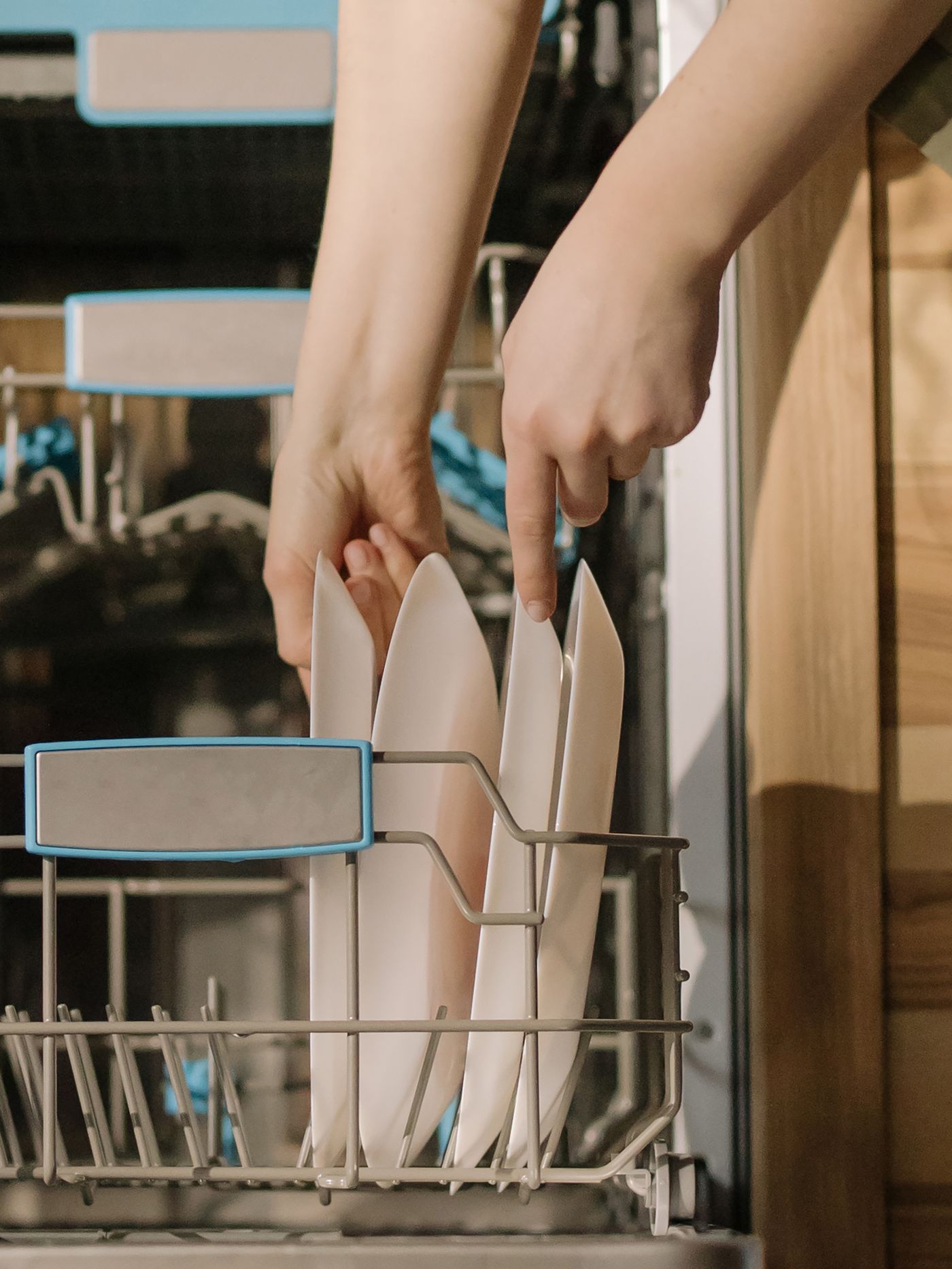
Check the basket arrangement against the largest items you use regularly. Will a tall plate stand upright with clearance for the spray arm? Can you raise the upper basket without losing the space your glasses need? Photographs of an empty interior can be more informative than styled kitchen photographs. Take the measurements of awkward pieces when inspecting a display model, rather than trying to remember their proportions.
Compare the exact cabinet opening with each model’s installation drawing. Nominal size descriptions do not replace clearance requirements. Include the door swing, nearby drawers and the space needed to load the racks. A countertop appliance also needs the supporting surface, electrical supply and water connections specified for its particular model.
Compare the purchase with the washing routine
For two suitable U.S. models, compare the yellow EnergyGuide information and its assumptions. The stated yearly operating cost is an estimate rather than a promise about your bill. Your own electricity rate and washing routine affect the result. Record those differences beside the purchase price so the comparison remains understandable.
For a purely illustrative calculation, suppose one machine used 0.10 kWh less per wash and both ran 200 times a year. The annual difference would be 20 kWh. Your tariff would turn that into a money figure. This is arithmetic, not a consumption claim for a product on sale. Purchase price, delivery, installation and water costs belong alongside electricity in the comparison.
Choose the smallest suitable machine that handles your normal load without routinely requiring a second wash. When two options accommodate the same daily items, usable baskets and accessible controls may matter more than extra programmes. More capacity earns its place when you repeatedly use it; empty reserve space on its own is not a reason to spend more.
Keep a short record of the normal load, necessary door clearance and two suitable models. If an offer appears later, you can check whether the lower price meets the same requirements or introduces a new compromise.