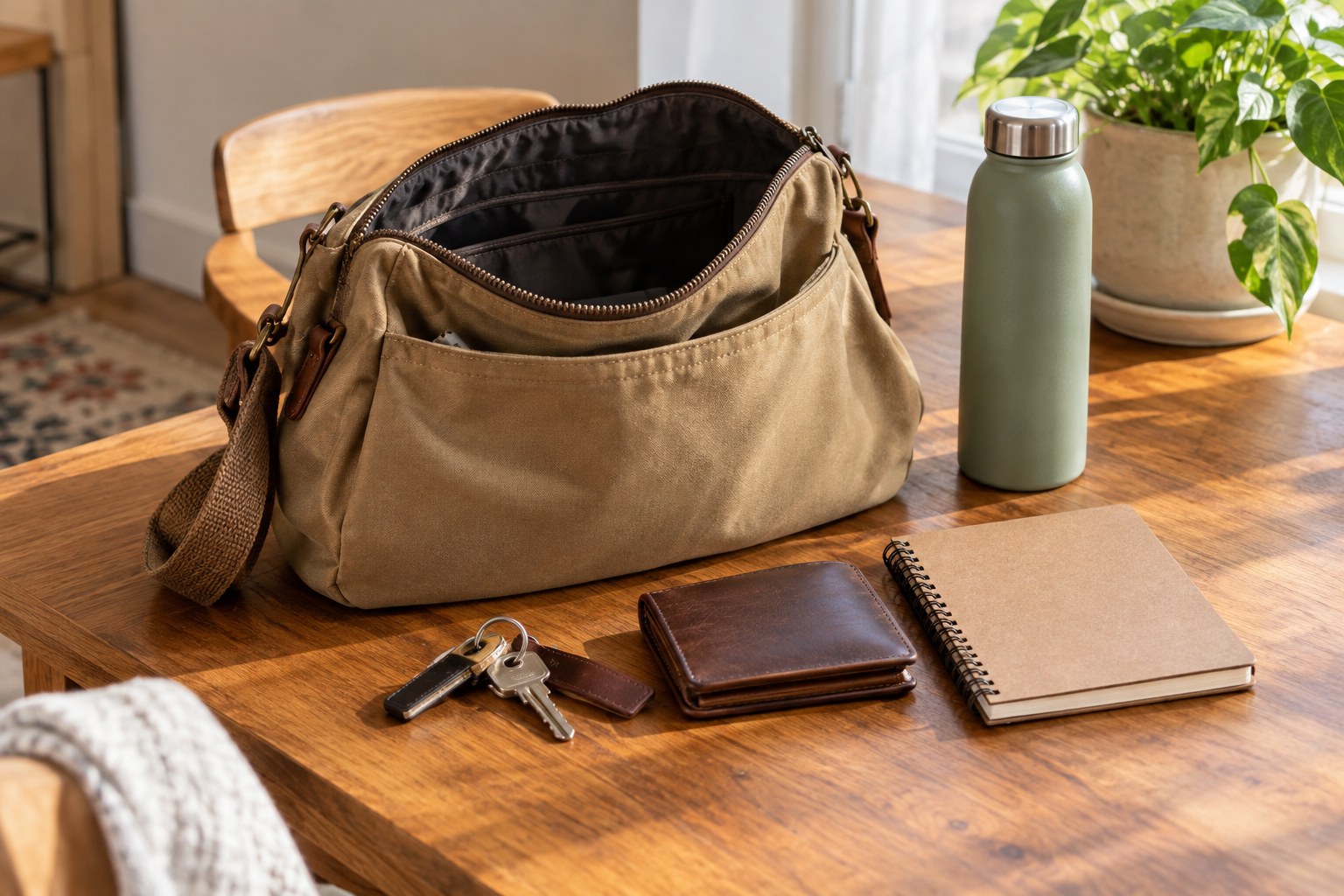
Put everything you carry on an ordinary day onto a table. Separate daily items from occasional extras. A phone, keys, wallet and small bottle create a different requirement from a laptop, gym clothes and documents. A bag should suit the normal contents rather than only the largest exceptional load.
Measure rigid objects such as a computer, folder or lunch container. A capacity in litres does not establish whether these shapes fit through the opening. Check internal dimensions and the zip opening, not just exterior measurements. A heavily padded compartment can provide substantially less usable room than the overall size suggests.
Check access and weight
Consider which things you retrieve frequently. A separate key pocket can help if it remains accessible. Numerous small compartments may instead get in the way when your largest item barely fits. Sketch a simple arrangement or try a bag with comparable contents rather than treating compartment count as a quality measure.
Include empty weight in the comparison. A substantial-looking bag may be heavy before anything is packed. If possible, try the straps with a realistic load and your usual jacket. Notice pressing buckles, slipping straps or uncomfortable contact while walking. Where several carrying methods are offered, the one you will mainly use should work convincingly.
Think about the base and where the bag is normally placed. Someone who slides it under a seat needs different proportions from someone who hangs it at work. Choose material and care requirements accordingly. A pale lining may make contents easier to see, but it should remain suitable for what you actually carry.
A small organiser pouch may improve an existing bag without requiring a larger replacement. Compare that option before discarding what you own. If you buy new, pack your ordinary belongings when it arrives and test access at home. A suitable bag allows those objects to fit and travel without constant rearrangement. Keep occasional bulky loads as a separate problem instead of allowing them to make every normal journey heavier.