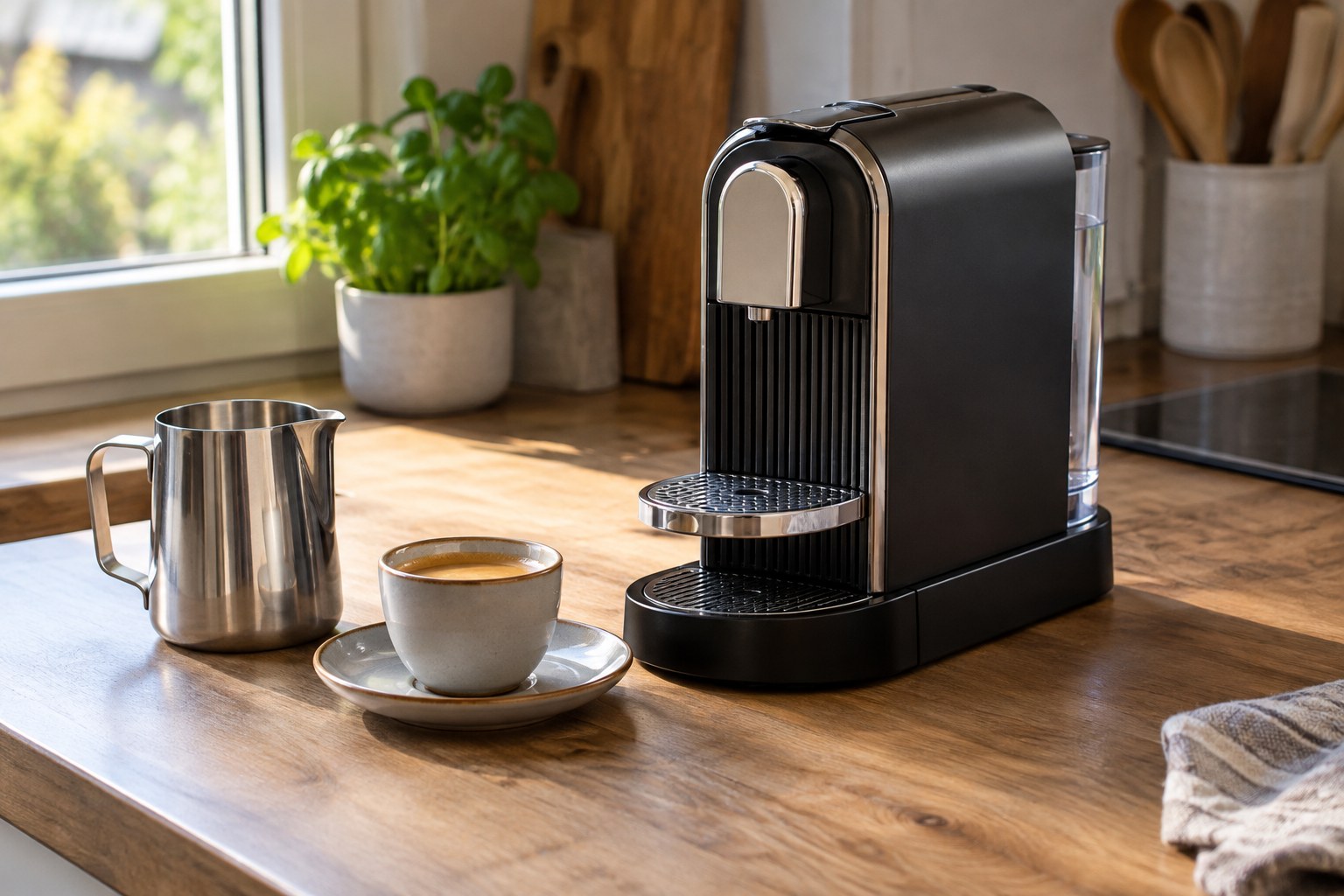
Someone who mostly drinks a large mug of black coffee has different requirements from someone making several milk drinks daily. Start the machine comparison with a drink list. A feature you pay for and never use adds cost without improving the morning routine.
Record a week, not a wish list
For seven days, note the drinks you actually prepare and how many people you serve. Separate one cup before work, a weekend pot and several drinks for visitors. These situations involve different workflows. A machine that makes one portion conveniently may become frustrating when preparing six drinks in succession.
Record how much manual work you want. Grinding, dosing and cleaning individual parts may be part of an enjoyable ritual or an unwelcome morning task. Compare more than the names of drinks on the menu. Similar drinks can come from different systems with substantially different preparation and ongoing costs.
Make room for milk-system care
If milk drinks matter, read the cleaning instructions for each system. Establish which parts need attention after use and how they are reached. An automatic programme does not necessarily eliminate every manual step. Follow the specific directions rather than substituting general household remedies for approved care products or procedures.
Measure the position with the water tank fitted and access panels open. Can you refill beans or remove the tank without dragging the whole machine forward? Check whether your preferred mug fits under the outlet. A small inconvenience repeats with every drink, making physical access worth considering alongside the headline features.
Compare portions consistently
Calculate the consumables needed for your preferred preparation method. These may include coffee, capsules, paper filters and specified maintenance products. Divide a pack price by the number of portions you would realistically prepare. Do not compare a small serving from one system with a large mug from another without making the difference explicit.
Avoid inventing taste judgements you have not personally established. You can still compare functions, handling and expenditure clearly. If only a few milk drinks are made each month, consider whether a separate suitable frother would meet the need. If several household members regularly want different drinks, broader machine capabilities may have a purpose. The deciding question is whether the additional equipment has a real role in the week you recorded.