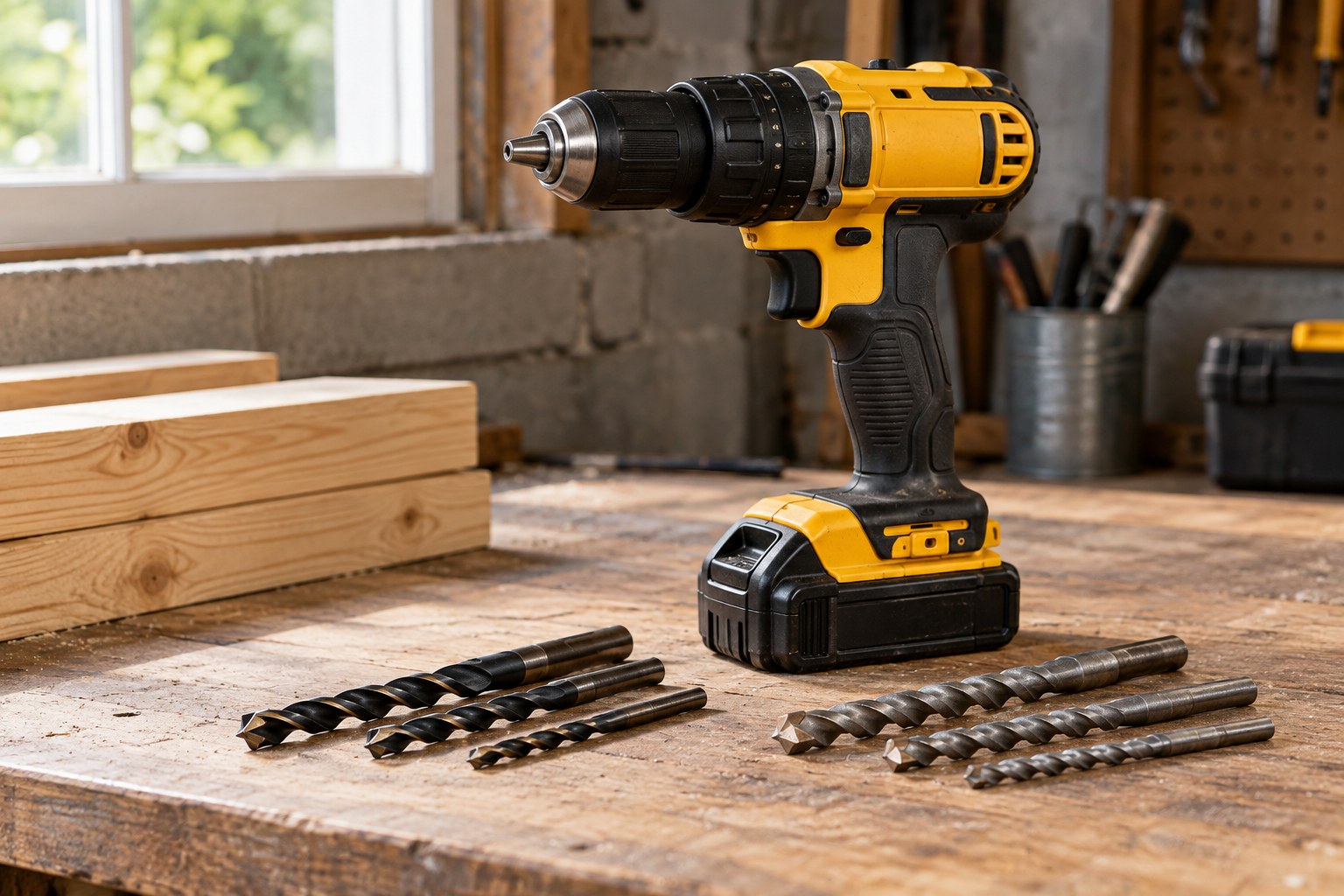
A drill is often bought for one project with the expectation that it will later handle many others. To keep the choice clear, establish the work genuinely planned first. A hole in wood, screw assembly and a fixing in an unidentified wall are not the same requirement.
List the next concrete jobs. Name the material, required function and any relevant assembly instructions. If the substrate is unknown, resolving that question comes next. A more powerful tool does not replace knowing the material or establishing safe working conditions.
Do not infer every capability from a product name
Bosch's tool overview distinguishes selection by wood, metal, masonry and concrete as well as by the task. That is a starting framework rather than a blanket recommendation for a particular model. Check the documented applications and limits of the exact machine.
Screwdriving and drilling can demand different controls and accessories. Adding a hammer function does not make a tool suitable for every wall. A large number on the box likewise does not replace the manufacturer's listed materials and working limits.
When seeking advice, describe the job before naming a preferred model. “This hole in this identified material under these mounting instructions” creates a different discussion from “the strongest machine at the lowest price”. Missing information becomes visible earlier.
Select accessories as part of the system
A bit must suit the material, task and machine's holding system. A large accessory assortment may contain many pieces irrelevant to the project. Check markings and required sizes rather than comparing only the number of bits included.
Fixing hardware is not determined by drill diameter alone. The substrate, load and mounted object's requirements matter. Where uncertain, obtain suitable professional advice. This article is not a step-by-step guide to drilling into unidentified walls.
If concealed cables or other services may be present, safe conditions must be established before work. Do not assume that purchasing another tool automatically resolves every uncertainty. Safe execution and the buying decision are connected, but they are not the same thing.
Calculate battery offers completely
A tool sold as a bare unit may exclude battery and charger. Check the actual supply. If a battery system is already owned, confirm exact compatibility; a shared brand or similar-looking connection is insufficient.
Compare the equipment needed to make the planned setup usable. A low-priced body plus separately required battery, charger and accessories can total differently from a complete kit. Conversely, a second battery is not automatically necessary for brief, occasional work.
Include the intended battery when considering weight and handling. The body-only weight may not describe the tool you will hold. Check whether controls and settings are understandable and accessible for your use.
Consider purchase, hire or a service
For a single demanding project, appropriate hire or a professional service may be another sensible option. Compare the real conditions, including accessories, timing and responsibilities. A rented machine does not resolve missing knowledge any more than an owned one does.
For repeated suitable tasks, owning an appropriate drill may simplify the routine. The relevant factor is realistic use rather than a list of imagined projects that are not actually planned. A large case should not create its own justification afterwards.
Record the selected functions, compatible accessories and complete cost. Before each job, continue to check the instructions and actual situation. A sound purchase provides an appropriate tool for defined work; it does not promise that one machine can complete every future task.