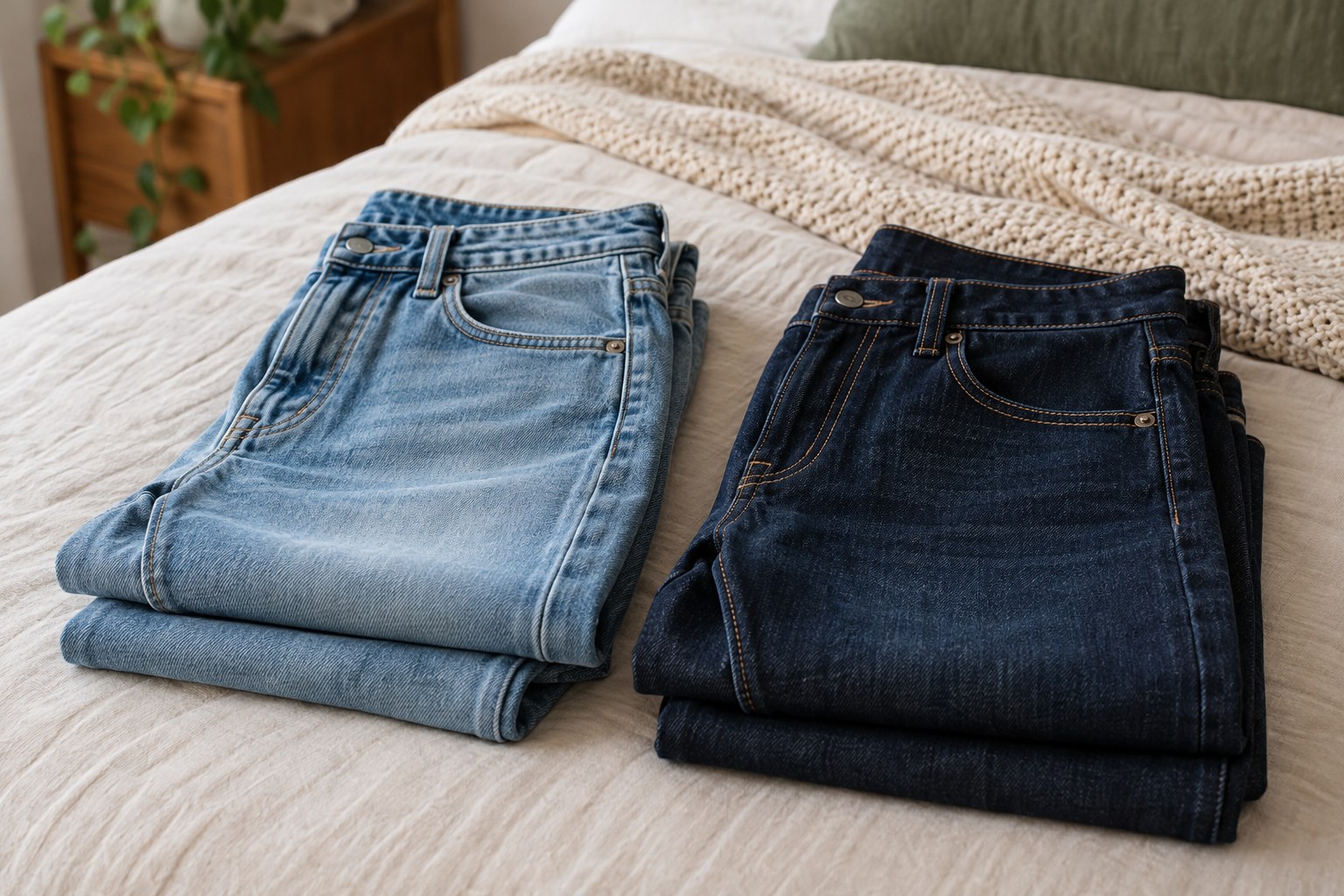
An appealing wash can distract from jeans that fit poorly in important places. Begin with the waist, rise and leg shape. Consider the shoes and tops you want to wear with them. Jeans may look good while standing yet feel awkward when sitting or climbing stairs. Use the fitting for ordinary movement rather than only a quick look in a mirror.
Compare with jeans you own whose fit you like. Record actual measurements and cut instead of copying only the printed size. Check how the new model is measured. Different rises also place the waistband at different points, so the same number does not necessarily create the same feeling when worn.
Assess stretch deliberately
Read composition and product descriptions without expecting one percentage to explain the whole fit. Notice whether the fabric moves comfortably and then sits neatly. Do not deliberately buy significantly too small in the hope that the material changes by precisely the amount you want. The jeans should already be sensibly wearable in the intended size.
Inspect pockets, seams and fastenings. A bulky fastening area or awkward pocket placement can become noticeable when sitting. Check leg length with the planned footwear. If an alteration is needed, ask about the work and its effect on the original hem. Add that expense to the purchase price rather than treating the sale ticket as the complete cost.
Only once the fit is convincing should you compare wash, colour and decoration. Strong effects may limit combinations with existing clothes, but they are not automatically impractical. What matters is whether you actually want to wear them. A discounted special style does not replace the everyday jeans you need if it performs a completely different job in your wardrobe.
After buying, retain the model and measurements. You can then make a focused comparison later even when colours or collections change. Well-fitting jeans can be worn frequently; you do not need several approximate alternatives to avoid resolving one fit problem. A useful record also helps when a retailer changes the name of a cut but supplies measurements that can be compared directly.