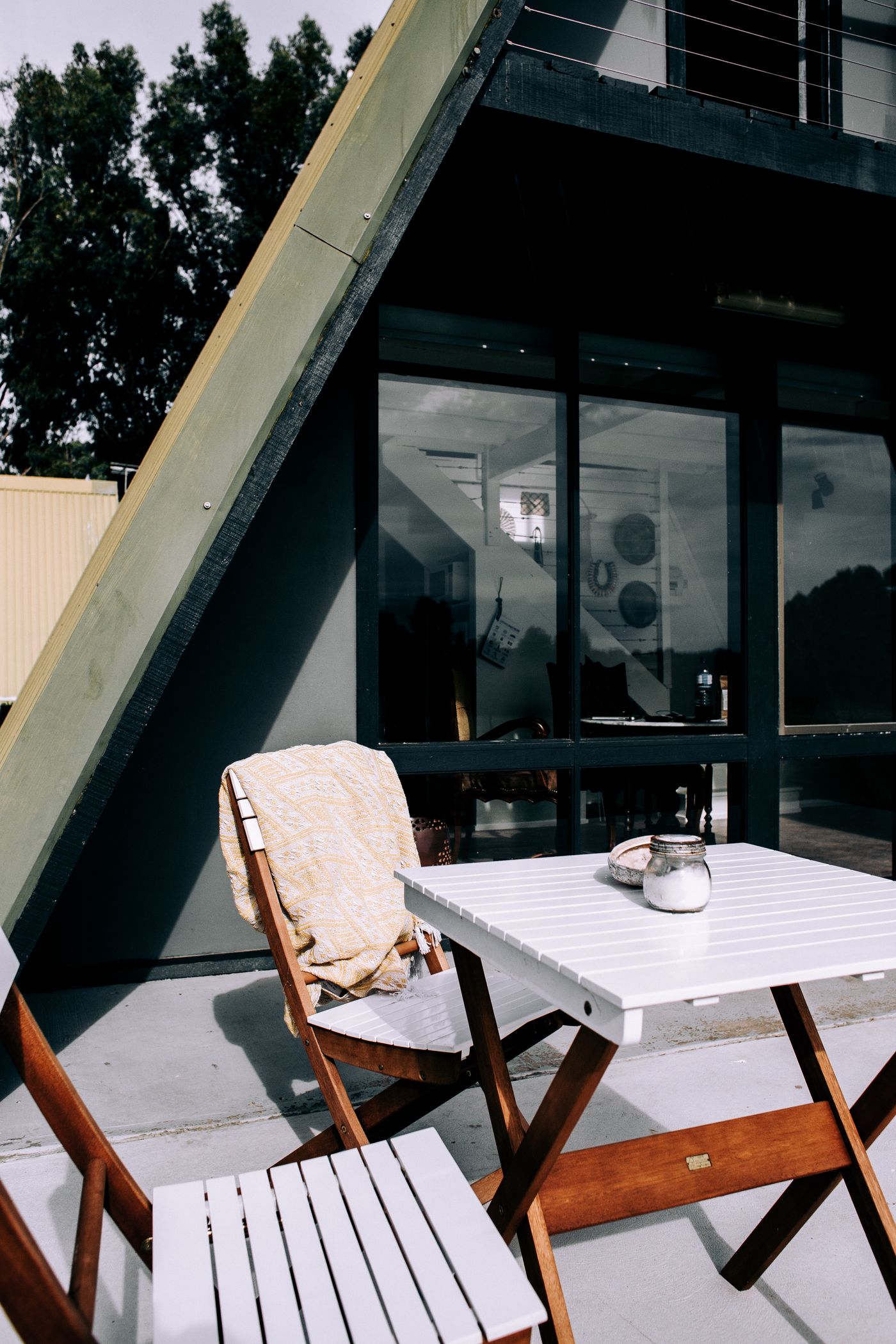
Outdoor furniture is usually shown in its most appealing situation: assembled, surrounded by clear space and suitable weather. For the household buying it, the location during long periods of non-use matters too. A set can fit the terrace while having no appropriate storage place. Resolve that second situation before purchase.
First establish which pieces are actually needed at the same time. Two regularly used chairs differ from a large group for occasional guests. A full range should not be purchased solely because of a bundle price when some pieces will remain unused.
Measure storage and its access
Measure the floor area and height, but also doorways and other entrances. A folded table may fit inside a room while failing to pass through its opening. Check the whole route from the outdoor position to storage, including steps and turns.
Include objects already stored there. A basement may look emptier before summer than when other seasonal belongings return. Allocate a specific area rather than hoping space will somehow be available later.
The manufacturer's storage requirements must suit the location. Outdoor furniture is not automatically intended for every form of unattended outdoor storage. Read the instructions for its actual materials and construction, including cushions and connections.
Folding is not a complete dimension
Ask for measurements in the fully folded state. Projecting legs, locks or arms can change the stored shape. A narrow side photograph may not reveal its thickest point.
Check the intended folding process and locking arrangement. Someone moving the furniture regularly should be able to operate it correctly within the permitted method. A stiff or unclear mechanism does not become manageable because it is used only seasonally. Follow the safe opening and closing instructions.
For stacking chairs, establish the height and footprint of the intended stack and the permitted quantity. Stackable does not mean unlimited chairs can be piled safely. The product information should clearly support the proposed arrangement.
Include dismantling and moving effort
Some furniture may be partly dismantled for storage according to its instructions. Establish the permitted steps and how small parts will remain identified. A connection system intended for initial assembly should not be repeatedly opened without confirmation that this is appropriate.
Consider the weight of individual pieces and the people needed. Compact stored dimensions help little if the furniture cannot be moved safely along the route. For large or heavy pieces, a different construction may be preferable to a complicated transport plan.
Include accessories and care
Covers, storage bags or cushion boxes can add to the purchase. Check which are necessary and suitable for the specific storage plan. An arbitrary cover does not replace guidance on ventilation, moisture or maintenance.
Any required cleaning or drying before storage also needs time and space. A set demanding extensive preparation may not fit the available routine. Record that effort as a decision factor without inventing a falsely precise annual cost.
Consider storage in stages
If the table and chairs are put away at different times, assess those intermediate arrangements too. Two chairs may remain outside longer while the table is already stored. The plan should not require every item to be accessed in one fixed sequence. Burying a still-used piece at the back of a stack creates unnecessary moving work.
For furniture designed to be dismantled, identify which small parts need to stay together. Suitable labelled storage beside the associated components simplifies the next assembly. Keep the instructions with them rather than relying on memory several months later, especially when different pieces use similar-looking connections.
In shared storage, make the allocated area understandable to others. Preserve necessary paths and access, and avoid an arrangement requiring heavy furniture to be moved whenever another object is needed. This treats storage as a recurring process rather than a one-time match between outside dimensions. A layout that is easy to use is more likely to remain orderly throughout the season.
Finally, compare two complete states: outdoor use and appropriate storage. Once both work, assess material, appearance and price among suitable options. This prevents a summer furniture purchase from becoming an unexpected search for extra space in autumn.