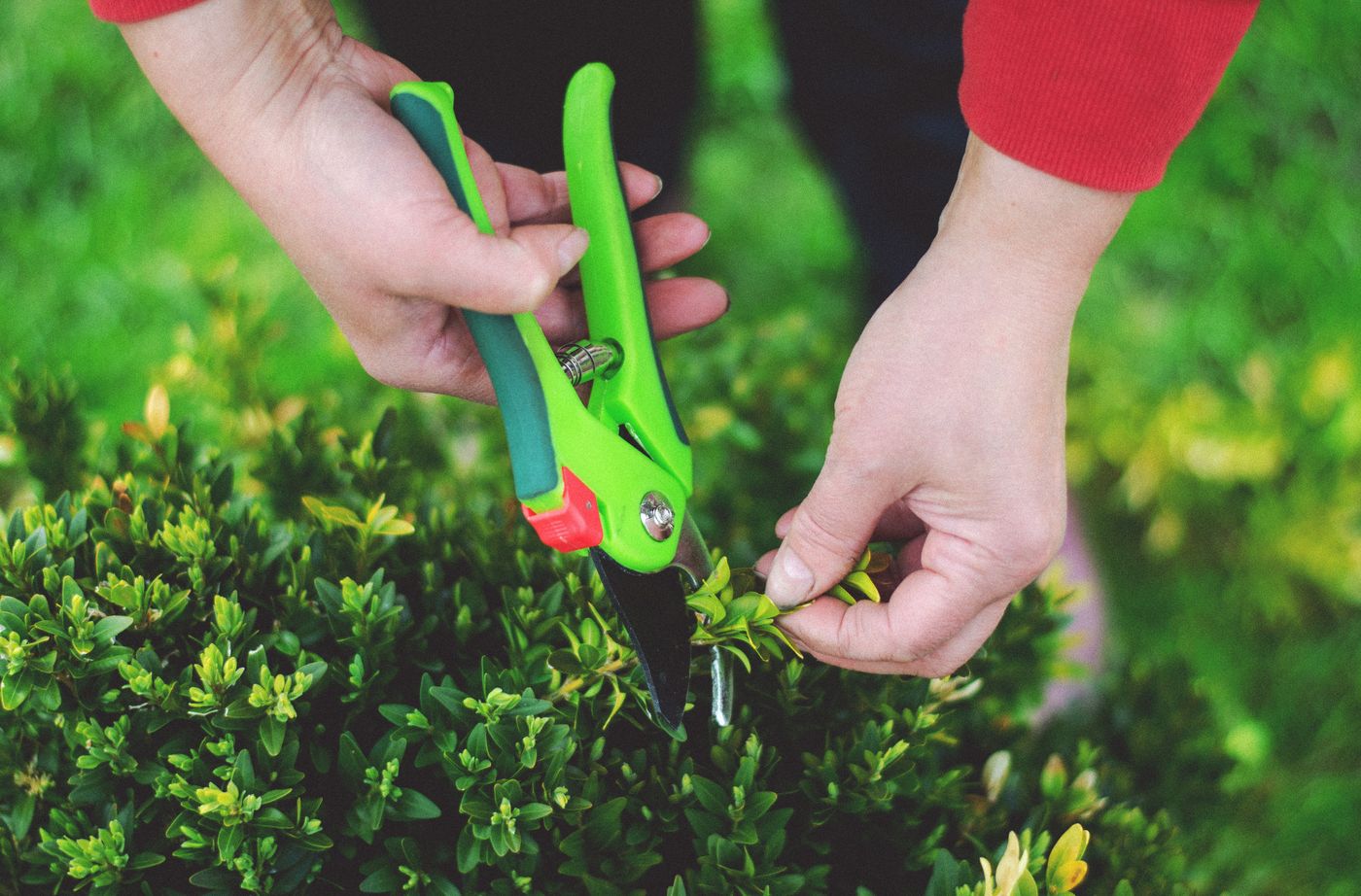
A pruning tool should not be selected solely by its widest opening. It needs to fit the plants, intended cuts and handling requirements. Start with the work that actually occurs and establish the plants' specific needs. Buying a tool does not replace knowing the appropriate timing or care for a species.
Record whether the work mainly involves small shoots, larger twigs or another defined task. Read the manufacturer's applications and cutting limits. A branch that physically fits between blades is not automatically within the intended working capacity.
Match construction to application
Manufacturers distinguish several cutting principles. Gardena, for example, describes bypass secateurs with blades passing one another. The intended application of the specific design should be clear from its information. Do not choose only from a broad label such as “universal pruner”.
Check handle spacing and operation. The tool needs to be opened, closed and locked with control. If it is too large or heavy for the user's hand, a high maximum cutting figure offers little everyday benefit. Shared use can involve different requirements.
Assess access before adding reach
Longer or telescopic handles change reach and handling. They do not automatically make a risky working position safe. Plan only tasks that can be performed with suitable equipment and a safe position according to the instructions. Difficult or inaccessible work may call for professional help.
Compare the weight of the complete tool in use. For longer sessions, repeated holding and positioning matter as well as force at an individual cut. A product photograph provides limited evidence of that experience.
Check maintenance and spare parts
Read cleaning, maintenance and storage instructions. Establish whether blades, springs or other intended replacement components are available in the correct version. A replaceable part helps only if the procedure is supported and the right component can be identified.
Do not improvise damaged-part replacements. A tool with an unreliable lock or damaged cutting components should not remain in use while waiting for a promotion. Appropriate replacement costs belong in the assessment of continued ownership.
Begin with the tool for the most frequent defined task. Several similar pruners in one set are not automatically necessary. Add another only when a specific further job is not covered by the suitable tools already available.