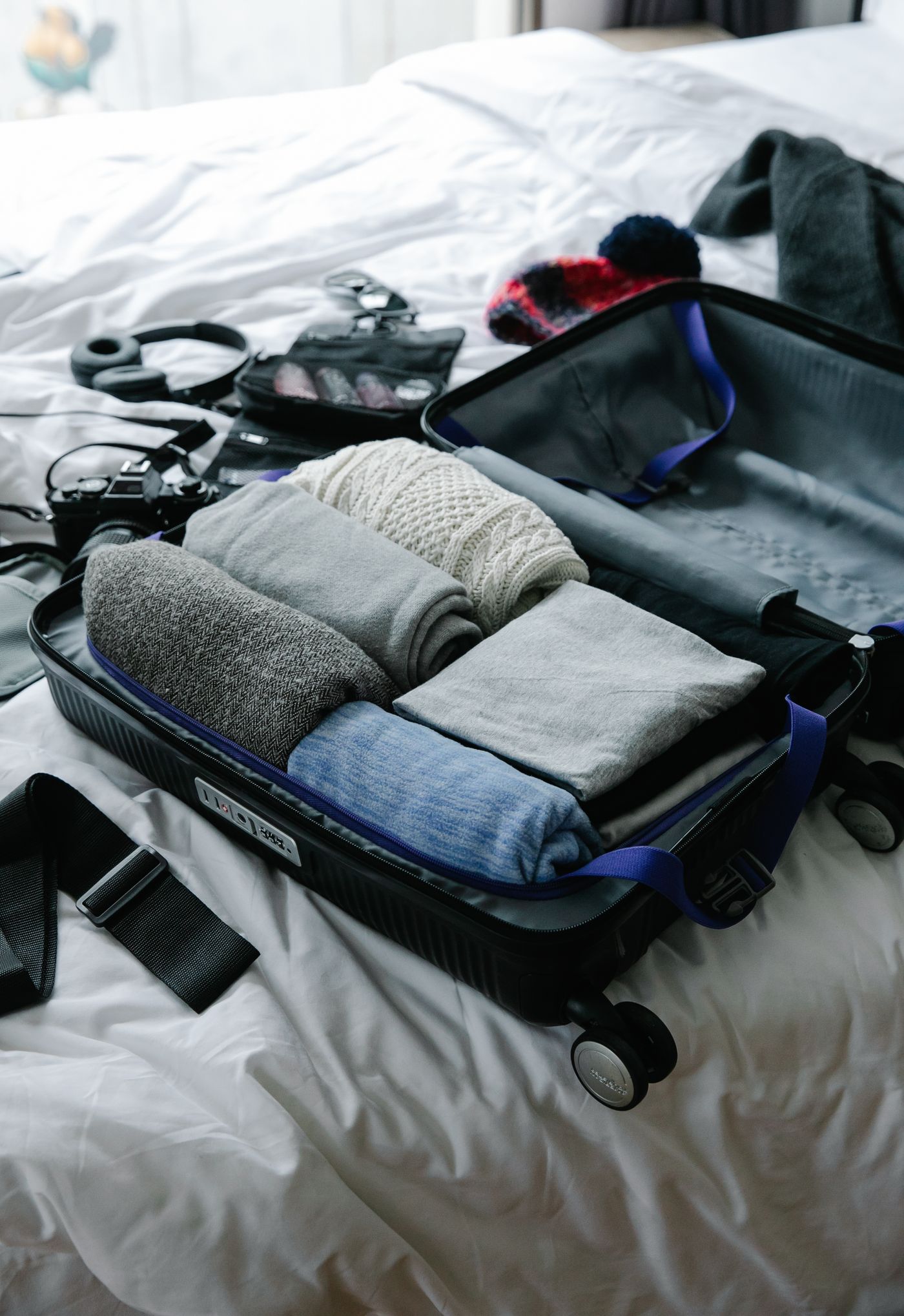
A suitcase does not become suitable because it is sold as small, medium or large. Begin with a trip you genuinely make regularly. Gather the clothes and objects needed for it. Separate essentials from things included only as a precaution. A larger shell can conceal an unclear packing list rather than solve the transport problem.
Next examine the journey. On a train, you may need to lift the case yourself and move through narrow aisles. For a car trip, boot space must be shared with other luggage. Flights are governed by the current conditions of the booked fare and operating airline. Do not rely on a generic cabin-baggage description from the suitcase maker.
Separate exterior dimensions from usable space
Compare complete outside measurements, including wheels and handles, with the relevant requirements. Ask when a dimension is unclear. Interior shape determines how your belongings fit at the same time. A strongly divided case packs differently from one deep main compartment. A high capacity figure says little about accommodating a particular rigid object.
Include empty weight in the calculation. It reduces the remaining allowance when a weight limit applies and matters on every staircase. A light case is not automatically best if its handles or wheels are inconvenient on your routes. If possible, try handling with a realistic load while staying within the product's permitted limits.
Assess expansion deliberately
A zipped expansion can help on certain trips, but it changes external dimensions. A case meeting a requirement when closed may no longer meet it when expanded. Check both configurations separately. Do not buy expansion as an imagined solution to every increase in packing volume.
Consider how the case opens at your destination too. A clamshell design may require more clear floor space than a bag opened from above. Think about whether you frequently retrieve individual items or unpack completely on arrival. This habit affects the value of compartments more than their number.
Replacement parts may matter, particularly wheels and handles. Check whether the exact model has an identifiable service route, and include any necessary organisers in the price. However, do not purchase a large accessory package before learning how the things you already own fit inside.
A trial pack before the first journey is more revealing than assumptions based on photographs. Check weight, access and whether the case closes without excessive pressure. If the ordinary packing list only fits when heavily overfilled, review either the list or the size. The appropriate choice is one that makes your real journey manageable and whose dimensions can be checked again for every booking. Retaining the complete measurements alongside the model name makes that future check straightforward.