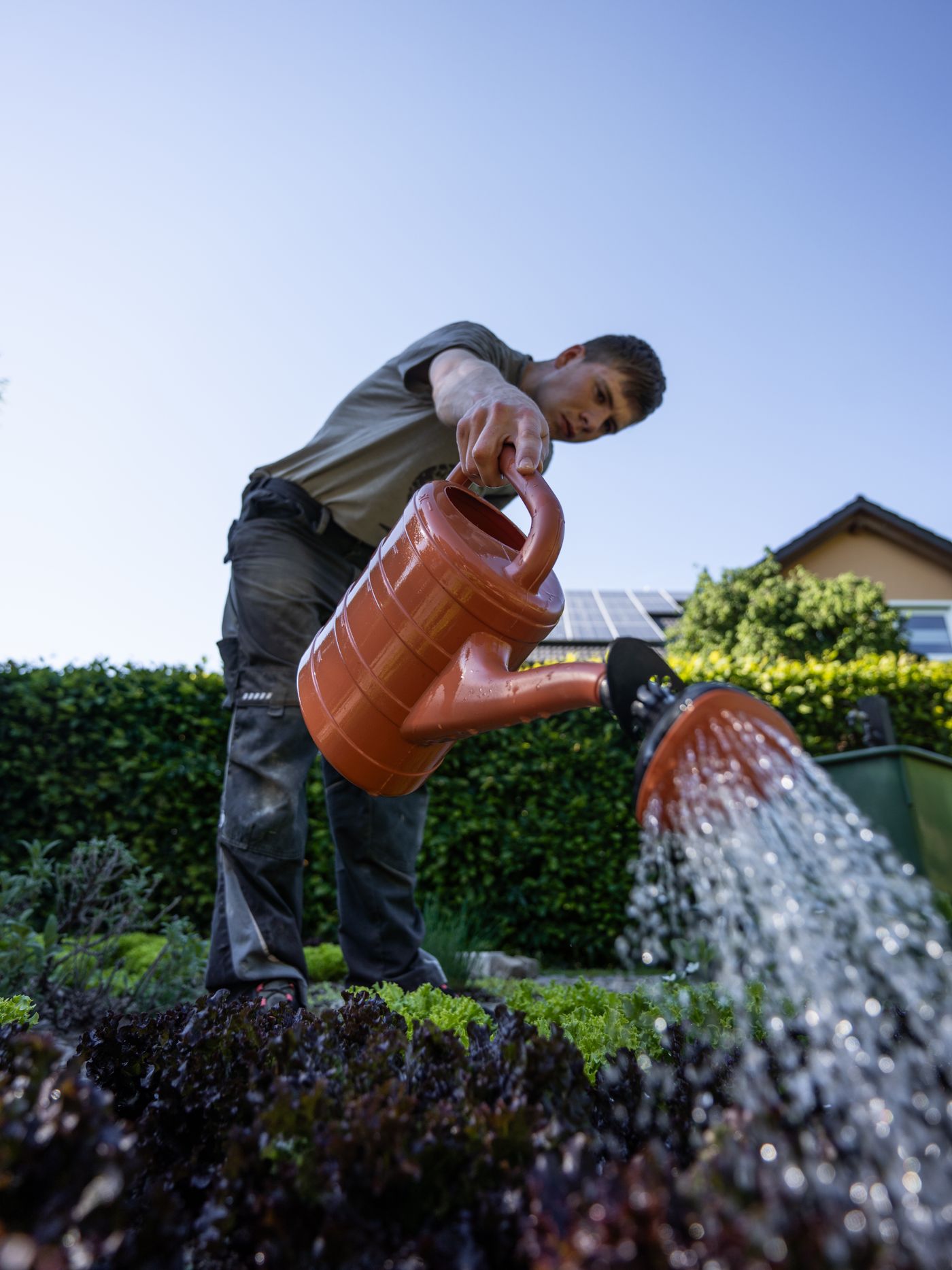
A large watering can may reduce refill trips while being awkward to carry from tap to plants. A small one is easier to store but needs filling more often. Begin with the actual route and the amount that can be handled comfortably.
Check whether the can fits beneath the available tap and how it will be filled. A wide opening helps only if the handle and shape allow access. At a small sink, outside dimensions can matter more than the stated capacity.
Match the spout to the destination
Indoor plants in narrow outer pots require different handling from large accessible balcony containers. Compare spout length and shape with the point where water will be delivered. A rose may be intended for particular applications but is not automatically appropriate for every plant or pot.
Check that removable parts can be attached securely and cleaned as instructed. Another accessory adds value only if it is useful for the planned application and does not repeatedly get lost.
Consider use when filled
Empty weight does not describe later handling. Include the intended water quantity and the route across thresholds, stairs or between furniture. Choose a capacity that can be carried and tilted with control rather than aiming only to minimise refilling.
Where several people use it, a medium-sized can or a second smaller one may work better than one very large model. That should follow from real needs rather than a desire to collect coordinated colours.
Allocate a storage place
Where will the can stand afterwards? A long spout can obstruct a narrow cupboard or balcony route. Measure its complete outline, not just the reservoir. Follow the material's storage and care instructions.
An existing can that already supports the routine does not need replacing merely because a garden promotion appears. A purchase becomes useful when it solves a concrete problem: poor access, excessive weight or insufficient reach from an appropriate safe position. Let that task determine the choice.