A small defect can make a discounted garment interesting when you know precisely what you are accepting. Begin with the item and temporarily ignore the sale label. Would you wear it if it fitted and had no defect? If the cut, colour or purpose is wrong, a further price reduction does not solve that problem.
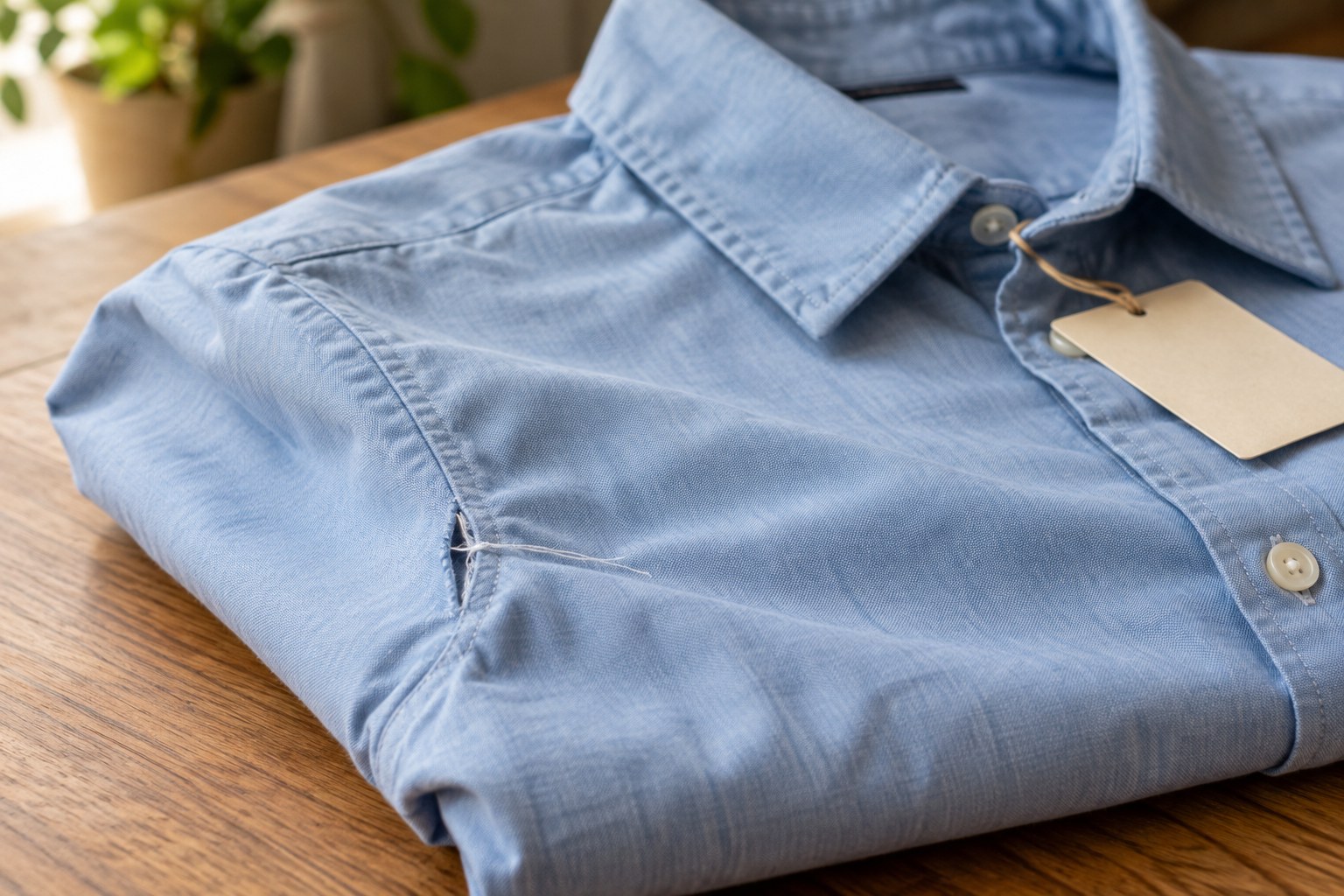
Examine the fault in good light. Is it a loose button, an open seam, a stain or damaged fabric? These require different responses. A stain is not automatically washable, and a hole cannot always be repaired invisibly. Do not rely on an improvised assurance that a simple household remedy will fix everything.
Understand the repair before paying
If repair is necessary for you, ask an appropriate professional about the work and any visible result. Describe the material and location precisely, or show the garment where possible. A fault in a heavily stressed area can require a different assessment from a cosmetic mark in a less visible place.
Add purchase price and estimated repair cost. Compare the total with a genuinely suitable alternative rather than the original high reference price. Include the trip to an alteration service and the date when you need the garment. An affordable repair offers little help if it will only be ready after the intended event.
Have the known defect recorded at the sale. Keep the description, photographs and receipt. Ask about the conditions of this particular offer instead of assuming every discounted item is treated identically. For legal uncertainties, current consumer information or individual advice is more useful than applying a rule remembered from an unrelated purchase.
You may deliberately accept a minor cosmetic flaw without repairing it. What matters is that it does not interfere with use and that you make the choice before paying. If instead you must continually hope an uncertain treatment will remove the problem, the discount may simply introduce further expenditure. A clear decision to live with a known mark is different from buying an unresolved repair project.