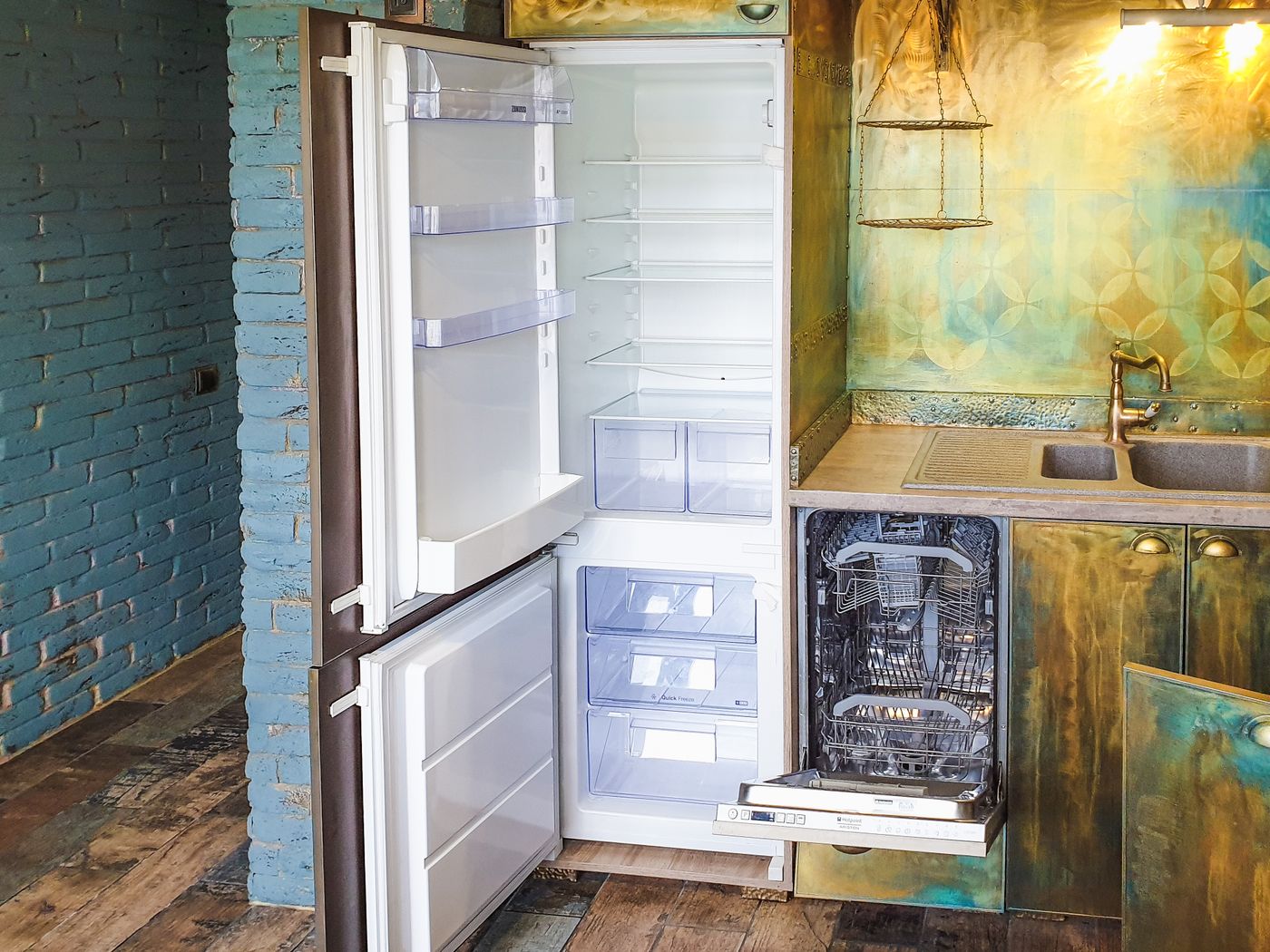
A refrigerator's outside dimensions describe the closed appliance. Daily use also requires access to its door, shelves and drawers. Beside a wall or in a narrow kitchen, check door movement before buying rather than waiting for installation.
Plan with the appliance open
Draw the position and neighbouring furniture. Mark the hinge side and the opening area specified by the manufacturer. A handle may strike a wall before the door panel itself does. Check whether an opposite cupboard or walking route is also affected when the door is open.
Access to lower drawers is especially important. Some can only be fully withdrawn when the door opens sufficiently far. That affects cleaning and removal as well as reaching vegetables each day. A door that opens enough to retrieve a drink does not establish that the whole appliance is usable.
Request the precise model's installation drawing when photographs leave questions unanswered. A similarly sized version may use a different hinge arrangement. Do not apply a clearance recommendation from an unrelated model. The required space must be checked for the actual appliance being ordered.
Treat reversing the door as a separate task
If you need the opposite hinge side, confirm that reversal is intended for that version. Establish who will do it, which parts are necessary and whether the service is included. A statement that reversal is possible does not mean it will already be completed at delivery.
Built-in appliances also involve furniture fronts, fixings and the existing kitchen. Resolve compatibility questions before ordering. Correct width alone is insufficient for that combination. Avoid planning improvised hinge or furniture alterations to force an unsuitable arrangement to work.
Finally, assess the complete movement: open the door, withdraw the relevant drawer, remove its contents and close everything again. If that can happen without collision or awkward avoidance, the location is plausible. Only then should extra litres or a decorative finish influence the decision. A slightly smaller model with accessible drawers may provide more useful convenience than a larger machine whose storage remains obstructed. This is capacity you can actually use, rather than capacity that appears only on the specification.