A laundry bag can be a useful accessory for certain garments, but it does not make an unsuitable washing treatment appropriate. Begin with the clothing's care label. GINETEX describes that information as the limit of permitted treatment. If a garment is not suitable for the intended machine wash, adding a bag does not change that.
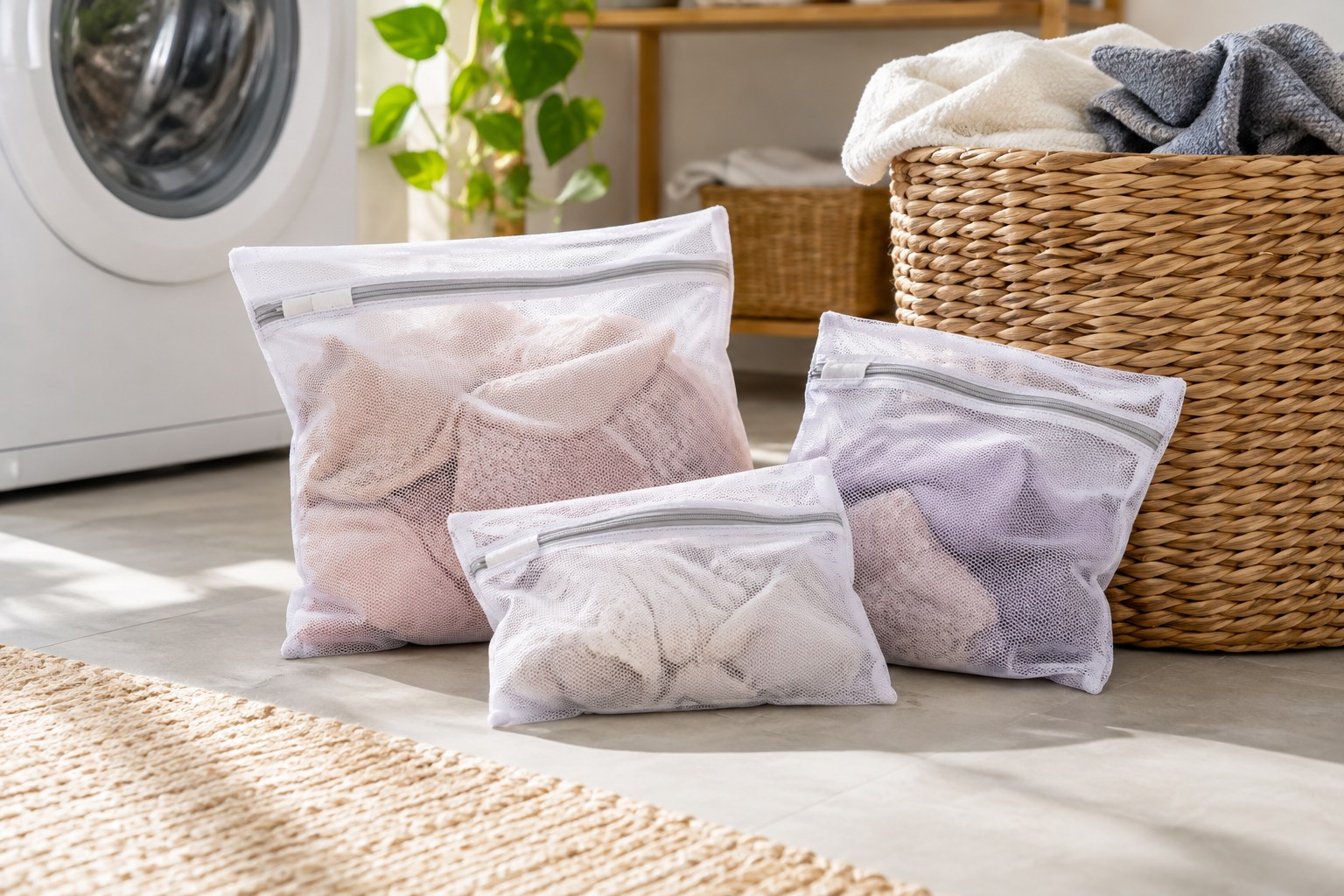
Gather the items for which you are considering a bag. Small delicate pieces need a different size from a larger top. A very large bag is not automatically more versatile. Clothes should fit according to the bag maker's guidance rather than being compressed inside. Do not choose solely by the greatest number of bags in a pack.
Inspect the closure and shape
Check how the zip is secured and whether projecting parts are covered. An easy-to-use closure helps regular use. Loose threads or damaged mesh should be noticed before washing. A cheap set with poorly finished edges can require more attention than its saving justifies.
Compare the shape with the intended garments. A flat bag loads differently from a structured design. A specialised shape is worthwhile only when it suits the contents you actually wash. Read instructions for cleaning and drying the bag itself so that it can be stored properly after use.
Plan quantities around an ordinary laundry load. If two suitable bags are enough, there is no need to purchase several rarely used sizes. Different colours may help sorting, but simple labelling or separate storage can serve the same purpose. The objective is to make the routine understandable, not add another collection of accessories to organise.
After the first uses, inspect both clothes and bags. A bag is an aid, not a guarantee against every kind of damage. Continue to follow temperature, programme and other care requirements. Where a garment has specific instructions, those take precedence over a general recommendation for delicate laundry. A small appropriate set can be used more deliberately than a collection of unrelated bags whose purposes remain unclear.