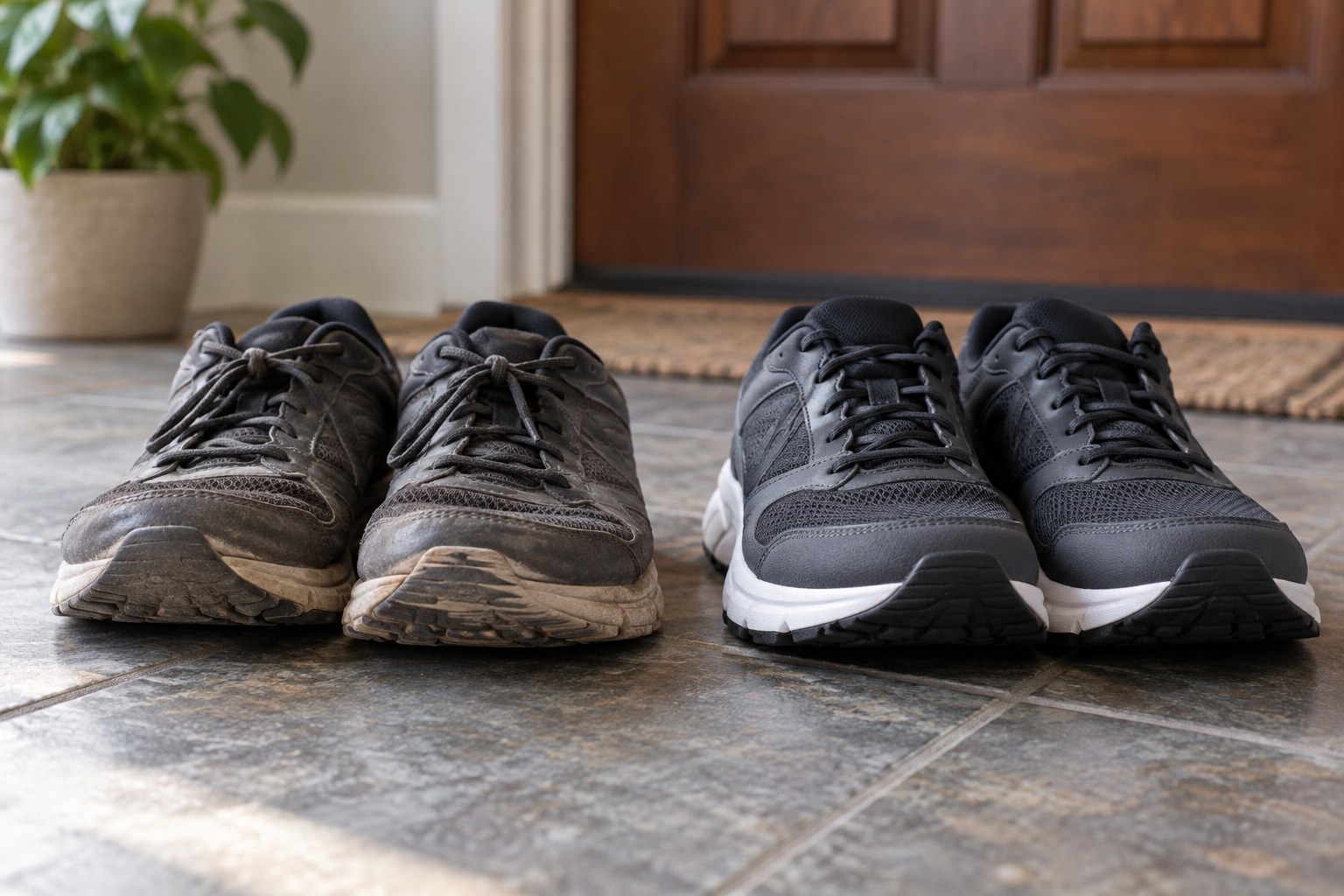
Everyday shoes are often replaced only when they seem barely usable for the following day. That leaves little time for careful selection. A simple replacement plan begins earlier: inspect the pairs worn most frequently. Notice visible damage, changes in fit and problems during their normal use.
Do not judge by age alone. Two pairs bought at the same time may have experienced very different wear. Record the routes each pair covers and roughly how often it is used. This helps identify replacement needs without claiming a fixed universal lifespan for all footwear.
Consider repair and replacement
For replaceable components such as laces, a suitable small purchase may be enough. For other damage, a shoe-repair professional can assess whether repair is feasible and worthwhile. Ask about cost, expected result and timing. A blanket decision based on a photograph or the original price may overlook significant differences.
When replacement becomes likely, record the features that worked: size, model, width, socks and any insoles. Still try a new version again. A similar product name does not guarantee unchanged cut or materials. Do not buy several spare pairs without considering future use and storage conditions.
Plan the purchase before an important trip or demanding work period. This leaves time for fitting and deciding whether the new pair genuinely suits you. A sale is useful when it meets a need already identified. It is less useful when it merely creates another collection of shoes while leaving the actual problem unresolved.
Set a realistic budget including necessary care or adjustment. Keep a serviceable existing pair available for appropriate situations, without continuing to use damaged shoes for unsuitable tasks. The plan is not intended to create a rigid replacement calendar. It prevents a foreseeable requirement from becoming a rushed purchase without an adequate fit check. Reviewing the record when your commute or activities change also helps ensure that the replacement serves your present routine rather than a route you no longer walk.