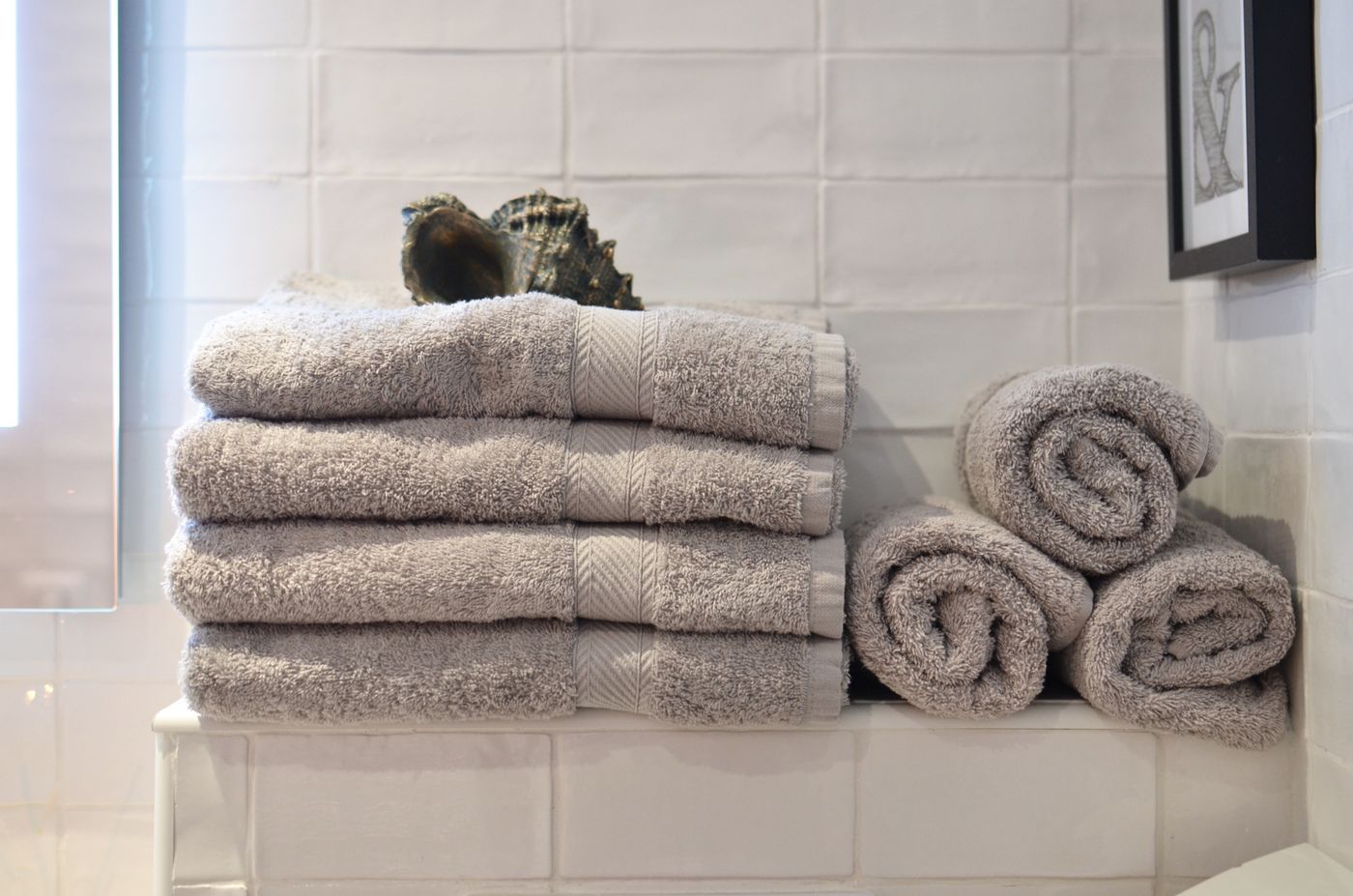
A large towel feels generous in a shop but needs corresponding space in the bathroom. If it bunches tightly on the available hook or constantly covers other textiles, a smaller suitable size may be more convenient. Begin with the holders and the normal routine after use.
Measure the clear width of a rail and consider how many people share it. A product photograph showing one neatly folded towel does not necessarily represent a busy household bathroom. Allow for the other textiles used regularly in the same area.
Plan size and quantity together
Choose dimensions for the task. A hand towel, hair towel and large bath towel need not share a format. There is no reason to buy every size in a coordinated range when some have no defined use.
Count how many are used at once and how many complete changes support the laundry routine. A large reserve does not replace suitable space for the towels currently in use. Conversely, too few spares can make the routine unnecessarily rushed when washing and drying take longer.
Include care and storage
Read the instructions for the selected version. Check that its dimensions and the total quantity fit the intended washing and drying arrangements. A particularly bulky fabric occupies more room without necessarily being required for every person or task.
Folded towels also need storage. Test the shelf with an existing comparable stack rather than assuming a certain number will fit. A much thicker new range can reduce the number stored in the same compartment.
In a shared household, clear identification by colour or position can help. The important point is that everyone understands the arrangement. Many similar shades can make identification harder rather than easier.
Try a modest suitable quantity of an unfamiliar version first. After several complete care cycles, handling is easier to judge. A large set becomes useful only when its sizes are needed and both the bathroom and cupboard can accommodate it.