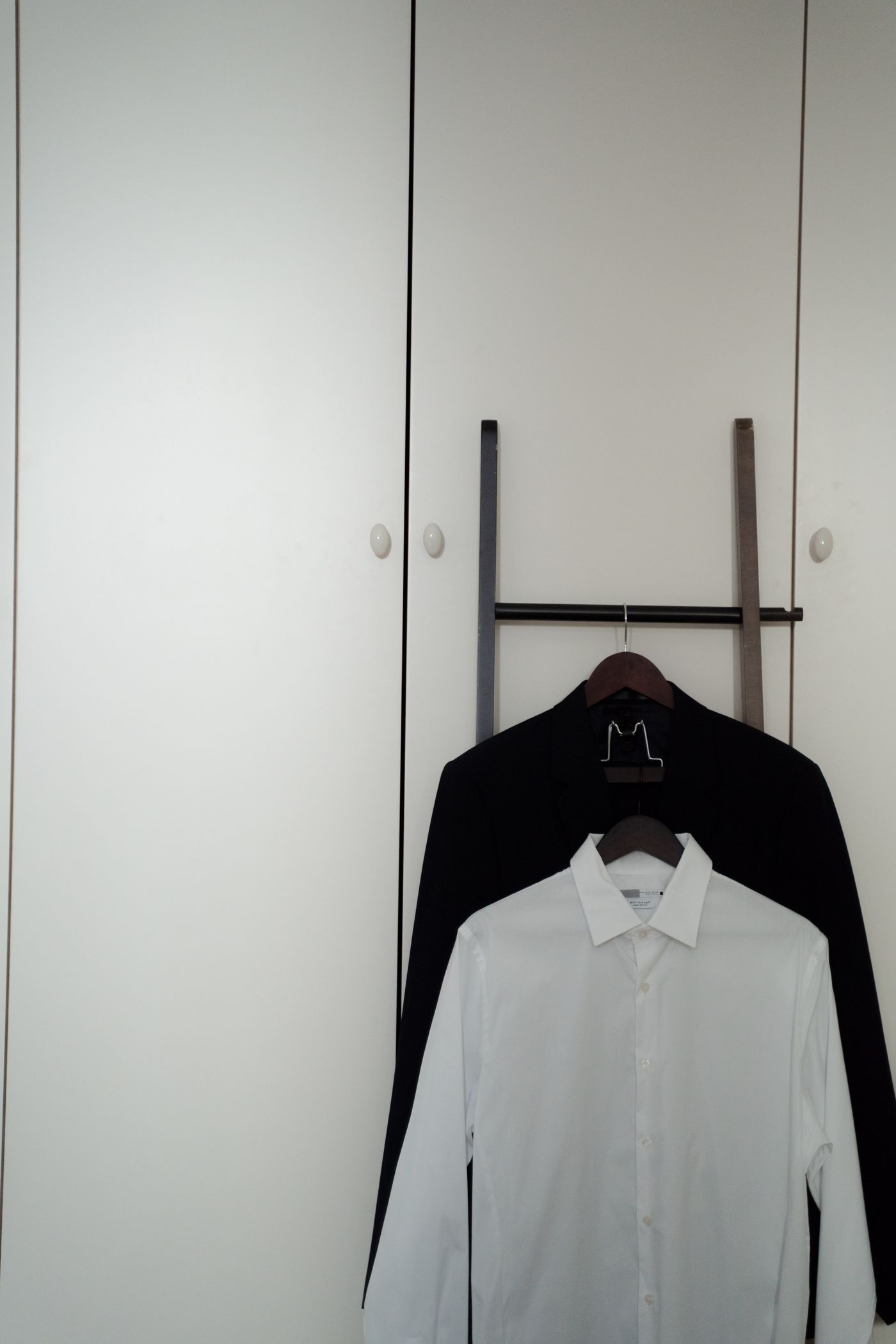
Trousers with slightly overlong legs may become suitable through a limited alteration. A garment needing fundamental changes in several places is a larger project. Purchase price alone does not reveal the difference. Before buying a discounted item as an inexpensive starting point, describe precisely what should change and what result you expect.
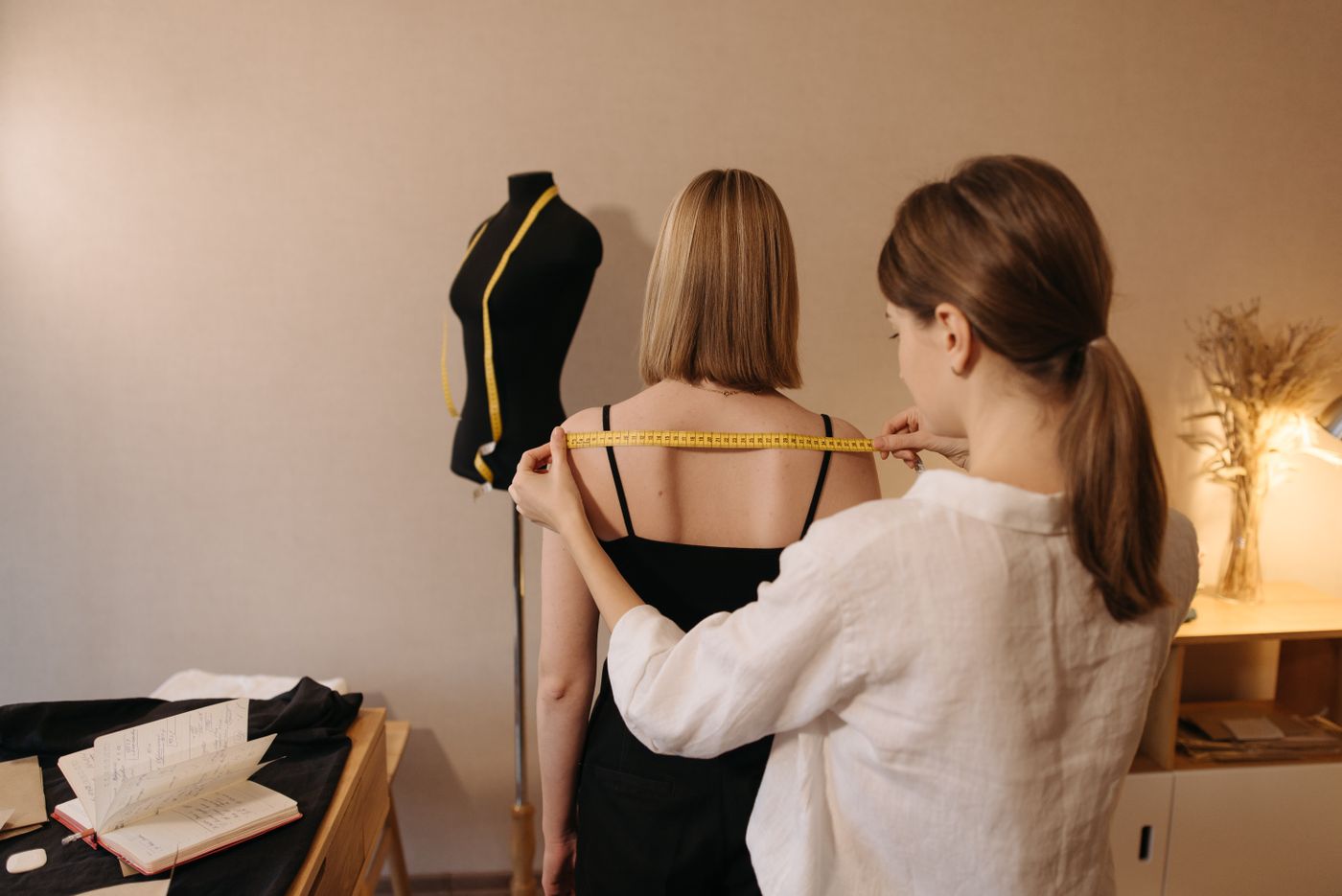
Begin with a fitting. Identify the location rather than simply noticing too much or too little fabric: waist, hem, sleeve, shoulder or chest. Check movement too. Something attractive while standing can pull when sitting. The alteration should address an observed fit problem rather than a vague hope that the overall appearance will improve.
Involve the professional before ordering
When an alteration is essential, an assessment before purchase is valuable. Show the garment or detailed photographs of seams, lining and features. A description such as a little narrower says little about the work involved. Pockets, zips, patterns and special hems can affect it. Ask about the likely visible result as well as price.
Establish whether enough material exists for the intended change. Letting out and taking in are not simply opposite operations. Changing length may also affect proportions when distinctive details sit at the lower edge. A professional can assess the limitations of the particular garment. General online instructions do not replace that inspection.
Compare the complete cost
Record the purchase price, alteration fee and any additional cleaning or travel. Compare the sum with another garment that would fit without alteration. Use a realistic alternative's price. The original reference price of the discounted item is not a useful benchmark if you would never have paid it.
For an illustrative example, suppose trousers cost forty-five dollars and the necessary alteration costs twenty-five. The total is seventy dollars. Another pair at sixty-five dollars can therefore be less expensive if it already fits. The altered pair may still be preferable if its fabric or cut meets your needs more closely. Arithmetic makes the difference visible; it need not decide the purchase automatically.
Consider timing too. For an imminent event, an uncertain completion date is a real difficulty. Ask whether another fitting may be needed and when collection is expected. Do not rely on further changes whose extent will only be established later if the garment is urgently required.
Bring the intended combination to the fitting
Wear or bring the shoes and underlying layers you expect to use. Trouser length is judged differently with different footwear. A thick sweater changes a jacket's fit compared with a light shirt. Explain how you intend to wear the item in everyday life so that the assessment goes beyond standing still in front of a mirror.
Record the agreed work and price. At collection, try the garment again before assigning it to an important occasion. Check the points previously discussed and move normally. Raising an unresolved issue promptly is more useful than discovering it on the morning of the event.
Alterations are particularly useful when they close a clearly limited gap between an otherwise suitable garment and the fit you need. They are less convincing when almost the entire garment must be reconsidered. The economical purchase is ultimately a wearable solution with understandable total costs, not the item displaying the largest percentage discount. Keeping the alteration record can also help you judge whether the same model is worth buying again, rather than repeating the full investigation from memory.